The Hour That Changed Everything
Dr. Margaret Sullivan knew that Tommy Henderson broke his arm falling out of the oak tree behind the Millers' house in 1978. She knew because she'd been treating the Henderson family for twelve years, and because Tommy's mother had called her at home that Sunday evening, voice shaking with worry. Dr. Sullivan drove to the hospital herself, spent two hours with the family, and followed up with house calls for the next week.
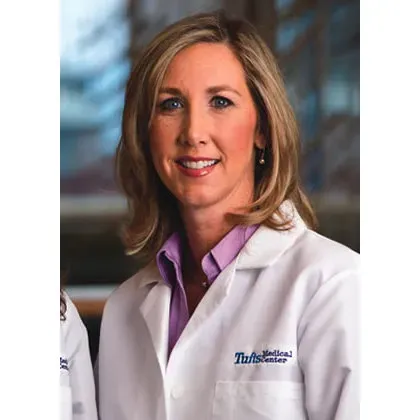 Photo: Dr. Margaret Sullivan, via img.lb.wbmdstatic.com
That kind of doctoring feels like fiction today.
When Time Was Part of the Treatment
In the 1970s and 1980s, the average doctor's appointment lasted 45 to 60 minutes. Physicians scheduled eight to ten patients per day, not the 25 to 30 that modern practices squeeze into the same timeframe. Your family doctor knew your job, your stress levels, your marriage troubles, and whether you were the type to downplay symptoms or catastrophize a headache.
These weren't luxury concierge practices. This was standard American healthcare. The physician sat down, made eye contact, and asked questions that seemed to have nothing to do with why you'd come in. How's work? How are the kids adjusting to the new school? Are you sleeping? The conversation meandered because doctors understood that health rarely announced itself with a neat diagnostic label.
Dr. James Morrison, who practiced family medicine in Ohio for forty years before retiring in 2015, remembers those days clearly. "I could tell you which patients were having marital problems just by how they held their shoulders when they walked in. You can't see that in seven minutes while you're typing notes into a computer."
 Photo: Dr. James Morrison, via www.wisar.ie
The Assembly Line Takes Over
Today's average primary care appointment lasts 7.4 minutes. Physicians spend 67% of that time looking at a screen, entering data into electronic health records that require 4,000 clicks per day. The doctor who once sat across from you now stands with their back turned, typing while asking rapid-fire questions from a predetermined script.
This transformation didn't happen overnight. It began in the 1990s when health maintenance organizations (HMOs) started paying doctors based on volume rather than outcomes. Practices discovered they could triple their revenue by seeing more patients faster. Electronic health records, mandated by federal law in 2009, promised to improve care but instead created digital paperwork that consumes more time than healing.
What We Lost in Translation
The old model wasn't perfect. Some doctors were paternalistic, dismissive, or simply wrong. Patients had less access to information and fewer treatment options. But something irreplaceable was lost when medicine became a transaction instead of a relationship.
Consider what happened to diagnosis itself. Dr. Sullivan could spot depression in how Mrs. Patterson described her garden. She noticed early dementia in the way Mr. Rodriguez suddenly stopped telling his usual jokes. These observations came from knowing people over time, watching for changes that only emerge in the context of a continuing relationship.
Modern physicians, seeing patients for the first time or after months-long gaps, must rely on symptom checklists and diagnostic algorithms. They're often excellent at identifying acute conditions but struggle with the subtle, evolving problems that define most of human health.
The Cost of Efficiency
Patient satisfaction scores have plummeted as appointment times shortened. In 1985, 78% of Americans reported being "very satisfied" with their healthcare experience. By 2019, that number had dropped to 44%. The most common complaint isn't about medical competence—it's about feeling unheard.
Physicians report similar frustration. A 2022 survey found that 62% of doctors feel they don't have enough time to properly care for patients. Many describe their job as "data entry with occasional medical practice." Burnout rates have skyrocketed, with nearly half of all physicians reporting symptoms of emotional exhaustion.
The Economics of Listening
The cruel irony is that rushed care often costs more in the long run. Patients who feel unheard return more frequently, seek second opinions, and end up in emergency rooms with problems that could have been addressed earlier. Studies show that primary care physicians who spend more time with patients actually reduce overall healthcare costs by catching problems early and building the trust necessary for patients to follow treatment plans.
Some practices are experimenting with longer appointments, subscription-based models, and technology that handles routine tasks so doctors can focus on patients. But these remain exceptions in a system designed around volume and efficiency.
The Appointment That Knew You
Dr. Sullivan retired in 2003, frustrated by insurance companies demanding shorter visits and more documentation. She still runs into former patients at the grocery store, people who remember not just that she treated their children's ear infections, but that she asked about their elderly parents and remembered their anniversary dates.
"Medicine used to be about people," she says. "Now it's about metrics."
The next time you sit in an exam room while your doctor types notes without looking up, remember that this isn't how it always was. There was a time when healthcare meant someone taking the time to actually see you—not just your symptoms, but you. That hour of attention wasn't inefficiency. It was the point.