47,000 Products and Still Nothing to Eat: How the American Grocery Store Became a Mirror
47,000 Products and Still Nothing to Eat: How the American Grocery Store Became a Mirror
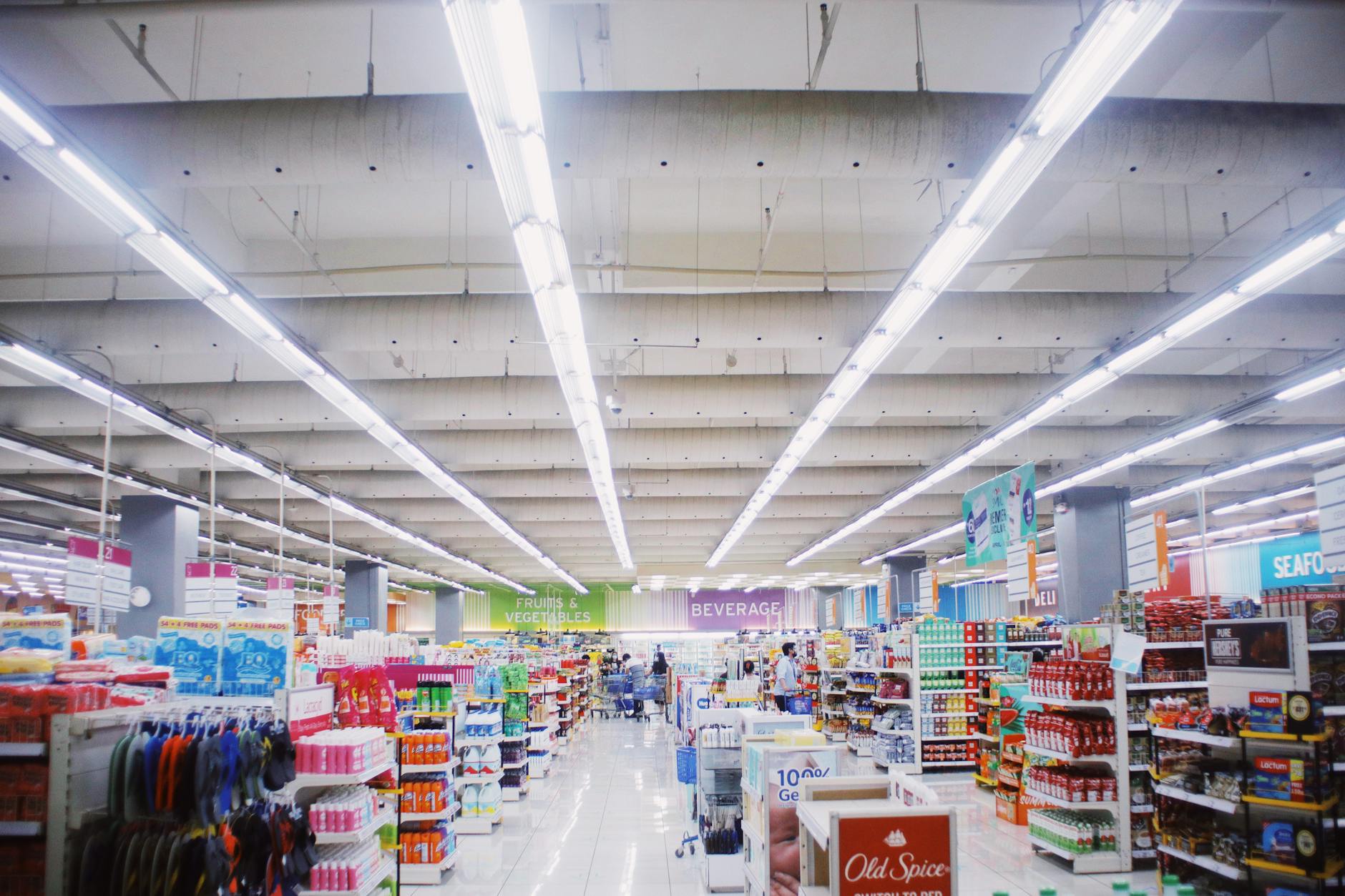
Somewhere between the oat milk section and the wall of protein bars branded with aggressive fonts and motivational slogans, it can be easy to forget that the grocery store used to be a fairly simple place.
You went in. You bought food. You left.
The transformation of the American supermarket over the past fifty years is one of those changes that happened so gradually, and so completely, that most of us can't even see it anymore. But the numbers make it impossible to ignore.
A Simpler Aisle
In 1975, the average U.S. grocery store carried roughly 9,000 distinct products — what the industry calls SKUs, or stock-keeping units. That sounds like a lot until you consider that today's figure hovers around 47,000, with some large-format stores pushing past 60,000.
The 1975 store would look almost unrecognizable by modern standards, and not just because of the harvest-gold color schemes and the distinct absence of self-checkout kiosks. Entire categories simply didn't exist. There was no bottled water aisle — the idea of paying for water in a plastic bottle would have seemed like a punchline. There were no energy drinks, no kombucha on tap, no refrigerated section dedicated exclusively to plant-based meat alternatives. The gluten-free section was not a section. It was not a concept.
Yogurt was yogurt. Bread was bread. Cereal was Corn Flakes, Cheerios, and a few other familiar boxes — not a 40-foot wall of options including varieties sweetened with monk fruit and marketed to adults who want to feel like children without the sugar crash.
What Filled the Space?
The explosion in SKU count wasn't random. It followed the logic of the market with remarkable precision, and that logic tells a story about American anxieties as much as American appetites.
The 1980s brought the processed food boom — line extensions, flavor variations, the proliferation of snack formats. The 1990s added the health food wave, moving products once confined to co-ops and natural food stores into conventional supermarkets. The 2000s layered on organic certification, which turned into an entire parallel universe of products occupying premium shelf space at premium prices.
Then came the really interesting phase — the fragmentation of identity through food. Suddenly the store wasn't just selling nutrition. It was selling belonging. The Paleo section. The keto-friendly tags. The kosher aisle expanding to serve customers who weren't Jewish but had absorbed a vague sense that the certification meant cleaner somehow. Products began to carry the weight of values — environmental, ethical, political — in a way that a can of green beans in 1975 simply did not.
The Bottled Water Problem
If you want one product that encapsulates the whole transformation, it might be bottled water.
America has some of the safest municipal tap water in the world. Yet bottled water is now the single best-selling packaged beverage in the United States, having surpassed soda around 2016. Americans spend roughly $20 billion a year on it.
The 1975 shopper would find this completely baffling. Not because they were naive, but because the problem bottled water solves — distrust of tap water, desire for convenience, the signaling value of a particular brand — either didn't exist or hadn't yet been manufactured into existence by people very interested in selling water.
That's not a cynical observation. It's just an honest one. Many of the 38,000 products that weren't in the 1975 store exist because someone figured out how to make a need legible, then fill it.
Choice as Anxiety
The psychologist Barry Schwartz wrote about the paradox of choice in 2004, arguing that more options don't make people happier — they make people more anxious, more prone to second-guessing, and more likely to feel dissatisfied with whatever they choose. The grocery store has become a kind of living laboratory for that thesis.
There are now more than 50 varieties of Oreo cookies. Fifty. The original is still there, presumably a little embarrassed by the company it keeps.
And yet — and this is the part worth holding onto — the abundance is also genuinely remarkable. Someone with celiac disease can now shop at a mainstream supermarket without planning around scarcity. Immigrant communities can find ingredients that once required a special trip across town. Dietary choices that were once socially marginal now have entire sections devoted to them.
What the Cart Reveals
The grocery store is, in the end, a pretty accurate portrait of the culture that built it. The 1975 store reflected a country that was more uniform, more trusting of shared institutions, and less preoccupied with individual identity as something to be curated and expressed through purchasing decisions.
The 2024 store reflects something else — a country with more options and more uncertainty about how to use them, more information and more confusion, more abundance and somehow a persistent low-grade anxiety about whether we're eating correctly.
Next time you're standing in front of seventeen types of almond butter trying to make a decision, it might be worth remembering: there was a time when that problem didn't exist. Whether that was better or worse probably depends on whether you have a nut allergy.