When Your Neighbor Knew More Than the Encyclopedia: How Americans Lived With Uncertainty Before Google
The Limits of What You Could Know
Imagine you're sitting at the dinner table in 1982, and someone asks: "How many countries are in Africa?"
Today, you'd have the answer in 3 seconds. In 1982, you had options, none of them satisfying.
You could walk to the living room and pull down your Britannica encyclopedia—if your family owned one. A full set cost around $300 in 1982 dollars (roughly $950 today), which meant many households didn't have one. Even if you did, the information would be 2-3 years old. Countries changed borders. Statistics shifted. But the encyclopedia was what you had.
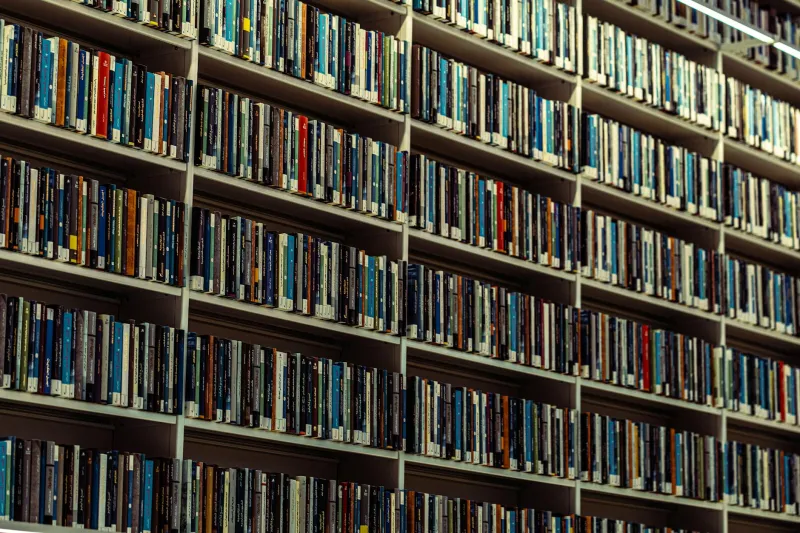
Alternatively, you could drive to the library. During business hours. You'd look up the country in the card catalog, find the call number, locate the book on the shelf, and hope it had the information you needed. This might take 30 minutes. It might take two hours. You might not find the answer at all.
Or you could ask your neighbor, or your teacher, or whoever in your social circle seemed knowledgeable. And you'd accept their answer, even if they were guessing.
So most people just... didn't know. They lived with uncertainty. And crucially, they didn't experience that uncertainty as a problem. It was just how things were.
Knowledge Was Rationed by Access
The pre-internet world was one where factual certainty was a privilege. It correlated directly with geography, class, and education.
If you lived in a major city near a university library, you had access to obscure information. If you lived in rural America, you had access to whatever was in your local library, which might be limited. If your family could afford encyclopedias and subscriptions to magazines, you had more information than your neighbors. If you went to college, you learned how to research and had access to libraries with extensive collections.
If you didn't, you worked with what was available.
This created a strange kind of knowledge inequality that's almost impossible to imagine now. A curious person in Manhattan and a curious person in rural Kansas had fundamentally different access to information. They lived in different information universes.
The person in Manhattan could go to the public library and find obscure books about ancient history, or physics, or art history. The person in Kansas had whatever the local librarian had decided to stock, plus whatever they could afford to buy. The gap wasn't small. It was profound.
The Workarounds Were Inefficient and Weird
People developed elaborate systems to navigate this reality. Some called the library and asked the librarian to look things up for them. Some wrote letters to organizations, waited for responses. Some subscribed to specialized magazines or newsletters. Some developed networks of friends and colleagues they could call for information.
The most dedicated knowledge-seekers would visit libraries regularly, reading through reference sections, hoping to stumble across useful information. They'd read the entire encyclopedia, or browse through National Geographic, or check out every book on a subject they were interested in.
It was inefficient. It was time-consuming. It required luck and persistence.
But it also created a particular kind of intellectual culture. People who wanted to know things had to be intentional about it. They had to plan. They had to spend time. This created a different relationship with knowledge—more deliberate, more valued, more rare.
There was also an element of social performance. Someone who had read widely, or who had access to good information, gained status from it. Being knowledgeable meant something. It marked you as educated, curious, well-connected.
The Transition Was Faster Than You'd Think
The internet didn't transform knowledge access gradually. It happened shockingly fast.
In 1995, most people didn't have internet access. By 2005, it was becoming normal. By 2015, it was ubiquitous. That's a 20-year transition from "knowledge is scarce and requires effort" to "knowledge is abundant and requires a single search."
Google launched in 1998. By 2005, it had become the default way most people answered questions. Wikipedia launched in 2001 and became a primary reference source almost immediately, despite initial skepticism from institutions.
The shift was so rapid that people who grew up before the internet developed a fundamentally different relationship with knowledge than people who grew up after. For people over 40, the internet is still somewhat novel. For people under 30, the idea of not being able to instantly verify any factual claim is almost incomprehensible.
The Irony: More Information, More Uncertainty
Here's where the story gets strange.
You'd expect that having instant access to factual information would make people more informed and more certain about what's true. In some ways, it has. Literacy has improved. Scientific knowledge has spread. People understand basic facts about health, history, and science better than they did in 1982.
But in other ways, the abundance of information has made everything less certain.
When you had one encyclopedia, it was authoritative. It was the answer. When you had three or four reference books, they generally agreed with each other. They were vetted. They had institutional credibility.
Now, when you search for any moderately controversial topic, you get contradictory information. Different sources. Different interpretations. Some are credible, some are misleading, some are outright false. The abundance of information means you have to develop judgment about which sources to trust—and not everyone is equipped to do that.
Moreover, the sheer volume of information available creates decision paralysis. You can spend an hour reading different perspectives on a single question and still not feel confident in your answer. In 1982, you'd have your answer in 30 minutes and you'd accept it.
The internet has also democratized misinformation. In 1982, if someone had a false belief, they had limited ways to spread it. Word of mouth. Maybe a self-published pamphlet. Now, false information can spread globally in hours. And because it's easy to find sources that confirm what you already believe, people can construct entire information bubbles that reinforce their existing views.
What We Actually Lost
The pre-internet world had real costs. Ignorance was easier to maintain. Certain kinds of knowledge were genuinely privileged. If you lived far from good libraries, you were at a disadvantage.
But it also had something we've lost: a shared epistemic framework. Most people relied on similar sources of information. The encyclopedia was the encyclopedia. The library had the library's collection. When people disagreed about facts, they could at least point to a common reference.
Now, we have abundance but no commons. Everyone can access information, but everyone can also find information that confirms their existing beliefs. We have more facts available than ever, but less agreement about what's actually true.
The dinner table conversation in 2024 might go like this: "How many countries are in Africa?" "Well, it depends on how you define a country, and also I found this source that says..." And suddenly, something that should be simple becomes complicated.
In 1982, you didn't know. But you knew you didn't know. And you accepted it. You lived with uncertainty as a normal part of existence.
Now, we have the illusion of certainty—instant answers to any question—but less actual certainty about what's true. We're drowning in information and somehow more confused than ever.
The real change isn't that we have more knowledge. It's that we've lost the comfort of not knowing.