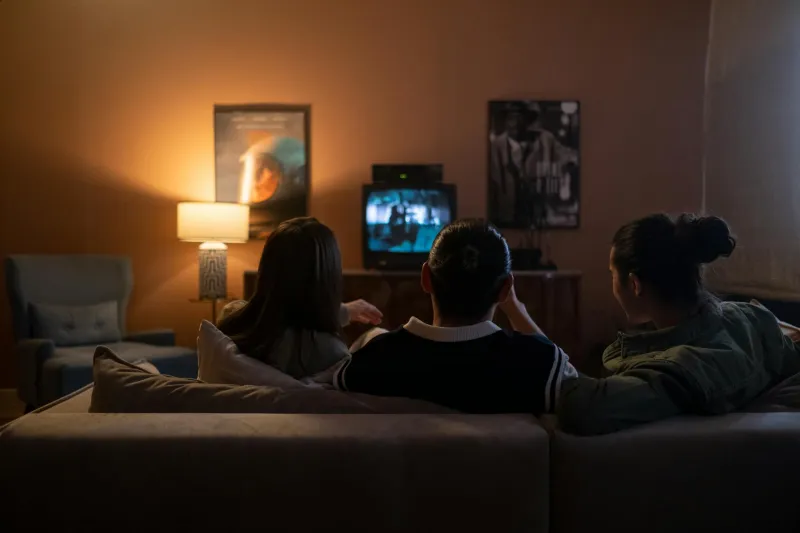
The Last Five Minutes of Silence: How Smartphones Stole America's Thinking Time
The Barbershop Philosophy Hour
Every Tuesday at 2 PM, Frank Castellano would settle into the cracked leather chair at Sal's Barbershop on Mulberry Street and wait. Not just for his haircut—that took twenty minutes. He'd wait for his turn, which could take an hour. Sometimes two.
 Photo: Mulberry Street, via c8.alamy.com
 Photo: Sal's Barbershop, via img.a-better-place.com
There was nothing to do but think.
No magazines except six-month-old issues of Sports Illustrated and Popular Mechanics. No television, just the radio playing soft jazz that nobody really listened to. No phone to check because phones were attached to kitchen walls back in 1978.
So Frank would sit in that chair, watching Sal work his scissors, listening to conversations drift between the weather and the Yankees, and letting his mind wander wherever it wanted to go. Some of his best ideas came during those Tuesday afternoon thinking sessions disguised as haircut appointments.
Today, Sal's grandson runs a modern salon where customers bring tablets, check emails, and scroll through social media feeds while they wait. Nobody stares at the ceiling anymore. Nobody thinks about nothing.
Nobody gets bored.
The Golden Age of Nothing
For most of human history, waiting was simply part of living. You waited for buses, for appointments, for your number to be called at the deli counter. You waited in line at the bank, at the post office, at the movie theater. Waiting wasn't a problem to be solved—it was just time that belonged to no one and nothing.
Americans in the 1970s and 1980s spent an estimated 37 minutes per day in various forms of enforced stillness: sitting in waiting rooms, standing in checkout lines, riding public transportation without entertainment systems. That's over four hours per week of unstructured thinking time.
We called it boredom. We had no idea how valuable it was.
The Architecture of Contemplation
Public spaces were once designed around the assumption that people would need to wait quietly. Waiting rooms featured simple chairs arranged to encourage either solitude or conversation—nothing in between. Lobbies had high ceilings and minimal decoration that invited the eye to rest rather than stimulate.
The DMV, that temple of American bureaucratic patience, was perhaps the purest expression of enforced contemplation. You took a number, found a seat, and waited. The only entertainment was observing your fellow citizens and wondering what stories brought them to this fluorescent-lit purgatory.
Those spaces taught Americans something valuable: how to be alone with their thoughts without panic.
The Smartphone Solution
The iPhone launched in 2007, but it took several years for its true impact on waiting to become clear. Suddenly, every pocket contained infinite entertainment. Every moment of potential boredom could be filled with emails, games, social media, news, videos, shopping, and messaging.
The transformation was remarkably swift. By 2015, the average American was checking their phone 144 times per day—roughly every 6.5 minutes during waking hours. The five-minute wait for coffee became an opportunity to scroll through Instagram. The fifteen-minute delay at the doctor's office became a chance to catch up on work emails.
Boredom, that ancient human condition, had been essentially eliminated.
We celebrated this as progress.
What Boredom Actually Did
Neuroscience research has revealed something surprising about unstimulated minds: they don't rest. Instead, they activate what researchers call the "default mode network"—a system of brain regions that becomes active when we're not focused on external tasks.
This network is responsible for some of our most important cognitive functions: making sense of experiences, planning for the future, developing empathy, and engaging in creative thinking. It's the mental equivalent of defragmenting a computer hard drive—organizing information and making new connections.
Those boring moments in waiting rooms and checkout lines weren't empty time. They were processing time.
The Lost Art of Line Conversation
Before smartphones, waiting in line was a social experience. Strangers made small talk about the weather, shared complaints about slow service, or simply acknowledged each other's presence with nods and smiles. These brief interactions created what sociologists call "social lubrication"—the basic civility that makes public spaces function smoothly.
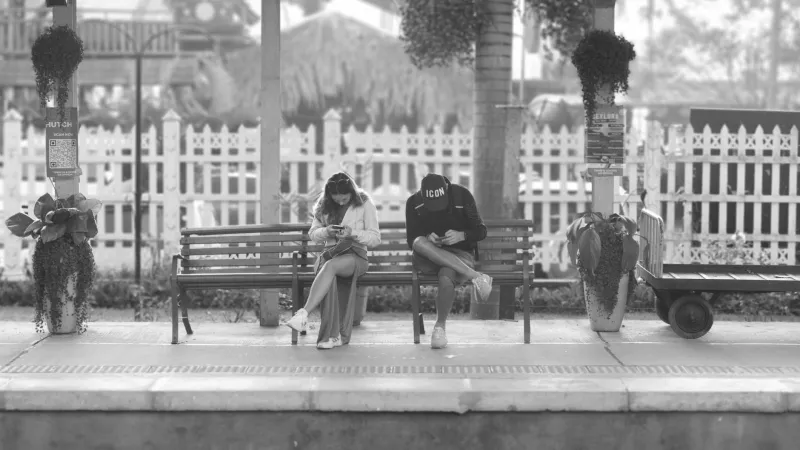
Watch a modern checkout line and you'll see something different: a row of people staring at individual screens, each isolated in their own digital bubble. The social fabric that once connected strangers has been replaced by the glow of personal entertainment devices.
We've gained efficiency but lost serendipity—those random conversations that sometimes led to job opportunities, friendships, or simply a moment of human connection.
The Creativity Crisis
Education researchers have identified a troubling trend: scores on creativity tests have been declining among American children since the 1990s, with the steepest drops occurring after 2010—coinciding with the widespread adoption of smartphones and tablets.
The correlation may not be coincidental. Creativity often emerges from boredom—from minds that have exhausted their immediate stimulation and begin making unexpected connections. When every spare moment is filled with external input, the internal processes that generate original thinking have less opportunity to operate.
Today's children rarely experience true boredom. They also show declining abilities to generate novel ideas, think divergently, and engage in imaginative play.
The Anxiety of Always-On
Paradoxically, our success in eliminating boredom has created new forms of discomfort. Many Americans now experience anxiety when separated from their phones, even briefly. The condition has its own name: nomophobia (no-mobile-phone phobia).
We've become so accustomed to constant stimulation that the absence of input feels threatening rather than peaceful. Silence has become uncomfortable. Stillness has become suspicious.
The very boredom we worked so hard to eliminate may have been serving as a form of mental rest that we didn't know we needed.
The Meditation Industrial Complex
As boredom disappeared from daily life, Americans began paying for what they used to get for free. Meditation apps generate hundreds of millions in revenue by teaching people skills that previous generations developed naturally during unavoidable waiting periods.
We now schedule mindfulness sessions and pay for guided relaxation because we've eliminated the natural opportunities for mental rest that once punctuated our days. We've created a problem and then built an industry to solve it.
The Last Waiting Room
Some spaces still resist the smartphone invasion. A few doctors' offices maintain "phone-free" policies. Some restaurants refuse to provide WiFi passwords. These holdouts feel almost quaint—museums preserving an extinct human behavior.
But visitors to these analog spaces often report something surprising: relief. The forced disconnection feels uncomfortable at first, then gradually peaceful. Conversations emerge. People notice architectural details they would have missed while staring at screens. Ideas surface that had been buried under layers of digital noise.
What We Bought With Our Boredom
The elimination of waiting time represents one of technology's greatest victories and perhaps its most costly success. We traded our thinking time for entertainment time, our processing periods for productivity periods, our moments of solitude for constant connection.
The transaction felt obviously beneficial: why endure boredom when you could be learning, communicating, or having fun? But we may have underestimated the value of what we were selling.
Those empty moments weren't actually empty. They were full of something we didn't recognize as valuable until it was gone: the simple, irreplaceable experience of being alone with our own thoughts, with nowhere to go and nothing to do but think.
In our rush to fill every moment with content, we may have forgotten that sometimes the most important content is the kind that emerges from nowhere at all.