
The Bible of American Living Rooms
Every Thursday, grocery stores across America received their shipment of what was arguably the most influential publication in the country. Not Time, not Newsweek, but a compact magazine with a yellow logo that would determine how 200 million Americans spent their evenings for the next week. TV Guide wasn't just a magazine—it was the roadmap to American culture.
At its peak in the 1970s and 1980s, TV Guide sold over 20 million copies weekly, making it the most-read magazine in America. Families planned their entire week around its grid of programming, and missing your favorite show meant waiting months or years to see it again.
The Ritual of Thursday
Purchasing TV Guide was as routine as buying milk. Grocery stores displayed it prominently near the checkout, and families grabbed their copy automatically. The magazine cost 35 cents in 1980—about $1.30 today—but it was worth every penny for the peace of mind it provided.
The moment you got home, someone in the family would spread that week's issue on the kitchen table and begin the sacred ritual of television planning. Mom would circle her soap operas and evening news programs. Dad would mark Monday Night Football and any war movies. Kids would highlight Saturday morning cartoons and after-school specials.
This wasn't passive consumption. This was strategic entertainment planning that required family negotiation, compromise, and sometimes genuine conflict.
The Art of Appointment Viewing
Before DVRs, before streaming, before even VCRs were common, television happened in real time. If "All in the Family" aired at 8 PM on Saturday, that's when you watched it—or you didn't watch it at all. This constraint created something modern viewers can barely imagine: genuine appointment television.
Families built their social lives around TV schedules. Dinner had to be finished by 7:30 PM because "The Love Boat" started at 8. Birthday parties ended early on Sunday because "The Wonderful World of Disney" was unmissable. Phone calls were forbidden during prime time because you might miss a crucial plot point.
The phrase "Must-See TV" wasn't marketing hyperbole—it was literal truth. If you missed "Dallas" on Friday night, you couldn't catch up. You'd be lost when everyone discussed "Who Shot J.R.?" at work on Monday morning.
The Great TV Guide Grid
The magazine's center spread was a masterpiece of information design: a grid showing every channel's programming for the entire week. Families studied this grid like military strategists planning a campaign. Conflicts had to be resolved: what happened when "Little House on the Prairie" overlapped with "The Incredible Hulk"?
Some families developed elaborate systems. The Johnsons in suburban Chicago used colored pens to mark each family member's must-watch programs, then held Sunday meetings to negotiate conflicts. The Garcias in Phoenix posted the grid on the refrigerator with family members' initials marking their priorities.
These weren't the desperate measures of television addicts. This was how normal families managed their entertainment in an era when choice was limited and timing was everything.
The VCR Changes the Game
When VCRs became affordable in the early 1980s, TV Guide adapted by adding VCR programming codes. These mysterious numbers—like "VCR Plus+"—allowed you to automatically record shows by entering a simple code. Suddenly, you could be in two places at once, televisually speaking.
But even VCR recording required planning. You had to remember to set the timer, hope nobody changed the channel, and pray the power didn't go out. Many families kept detailed logs of what they'd recorded, when, and on which tape. The living room entertainment center became mission control for managing multiple recording schedules.
When TV Brought America Together
The scarcity of television options created something that seems impossible today: a shared national conversation. When "Roots" aired over eight consecutive nights in January 1977, 130 million Americans—more than half the country—watched together. The next day, everyone had seen the same thing and felt the same emotions.
Office water cooler conversations revolved around the previous night's television. "Did you see what happened on 'MAS*H'?" wasn't a question—it was the opening line of a shared cultural experience. Teachers built lesson plans around educational specials because they knew every student would have watched.
This shared viewing created cultural moments that lasted decades. Everyone knew what "jumping the shark" meant because everyone had watched "Happy Days." Everyone could sing the "Gilligan's Island" theme song because everyone had seen the reruns.
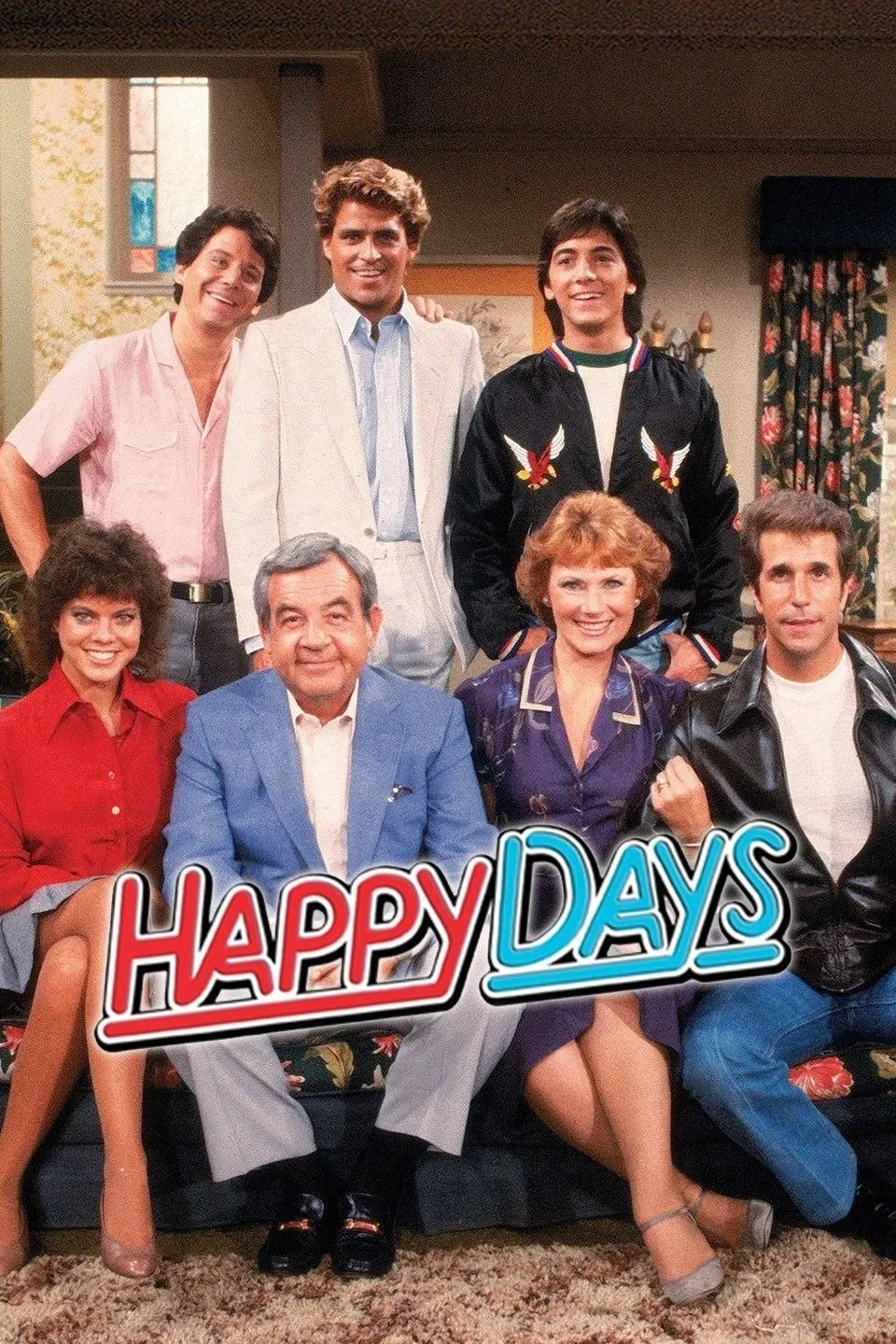 Photo: Happy Days, via i.pinimg.com
The Decline of Appointment Viewing
By the 1990s, TV Guide's influence began to wane. Cable television multiplied channel options beyond what any magazine could comprehensively cover. The internet provided instant access to programming information. TiVo and other digital video recorders made scheduling less critical.
The magazine tried to adapt, becoming more like Entertainment Weekly with celebrity gossip and behind-the-scenes features. But its core function—telling America what to watch and when—became obsolete in an on-demand world.
TV Guide's circulation peaked at 20 million in 1977 and fell to 3.2 million by 2005. The print edition finally ended in 2005, transitioning to a smaller format before largely disappearing from newsstands.
The Paradox of Infinite Choice
Today's streaming services offer more content than any human could watch in multiple lifetimes. Netflix alone adds more new content each month than the three major networks aired in an entire year during TV Guide's heyday. Yet somehow, we spend more time browsing than watching, paralyzed by options that our grandparents would have considered miraculous.
The appointment viewing that TV Guide facilitated created anticipation that on-demand streaming can't replicate. Waiting a week between episodes built suspense and community. Knowing that millions of others were watching the same thing at the same time created a sense of shared experience that binge-watching alone in your bedroom simply cannot match.
The Last Appointment
Some shows still attempt appointment viewing—live sports, awards ceremonies, season finales of major series. But these feel like exceptions in a world where most entertainment happens on our individual schedules.
The next time you spend twenty minutes scrolling through Netflix options before giving up and watching "The Office" reruns again, remember that there was once a time when choosing what to watch was simple: you looked at a little yellow book, found something that seemed interesting, and watched it when it was on.
Sometimes having fewer choices made life easier. Sometimes anticipation was better than instant gratification. Sometimes waiting for something made it more valuable.
TV Guide didn't just tell us what was on television. It taught us how to want things, how to wait for them, and how to share them with others. In a world of infinite content, that might be the most valuable lesson of all.