When Dad's Toolbox Was the Family's Tech Support: America's Lost Generation of Fix-It Men
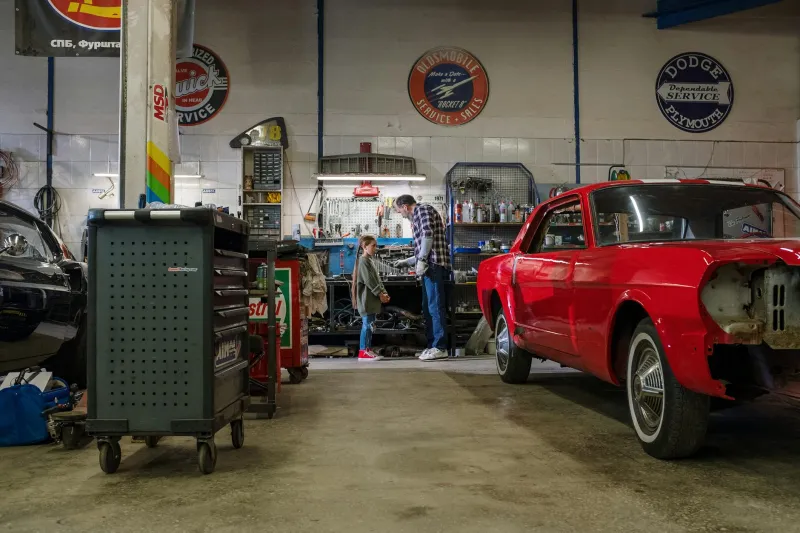
The Saturday Morning Ritual That Built America
Every Saturday morning in 1962, Jim Morrison would wake up early, grab his coffee, and head to the garage. Not to admire his car, but to take it apart. The transmission was slipping, the brakes needed new pads, and the carburetor required adjustment. By Sunday evening, the Chevy would be purring like new — and Jim would be $200 richer for not paying a mechanic.
Jim wasn't a professional auto technician. He sold insurance. But like virtually every American man of his generation, he possessed something that seems almost supernatural today: the ability to diagnose, disassemble, and repair the mechanical world around him.
When Fathers Were Walking Hardware Stores
In mid-20th century America, a man's competence was measured not by his salary or his golf handicap, but by what he could fix with his own two hands. The typical suburban dad could:
- Rebuild a lawnmower engine from memory
- Wire a new outlet without calling an electrician
- Replace a water heater in an afternoon
- Diagnose car trouble by sound alone
- Fix a washing machine with spare parts from the junk drawer
This wasn't considered remarkable. It was simply what fathers did.
The garage wasn't just a place to park cars — it was America's distributed repair network. Every neighborhood had dozens of mini-workshops, each stocked with hand tools, spare parts, and the accumulated wisdom of men who'd learned to fix things because paying someone else simply wasn't an option.
The Great Unlearning
Somewhere between 1980 and 2010, American men quietly surrendered their wrenches. Today's fathers possess college degrees their grandfathers never dreamed of, but they're helpless when the garbage disposal jams or the toilet runs continuously.
The numbers tell the story. In 1975, the average American household spent $150 annually on professional repairs and maintenance (adjusted for inflation: about $800 today). By 2020, that figure had exploded to over $3,000 — and that's before counting the army of specialists we now summon for tasks our grandfathers handled routinely.
Modern American men call professionals for:
- Installing ceiling fans
- Unclogging drains
- Changing furnace filters
- Programming thermostats
- Assembling furniture
- Hanging pictures
Tasks that once defined basic adult competence now require appointments, service calls, and Yelp reviews.
The Tools That Told a Story
Walk into a 1960s garage and you'd find tools that had stories. The socket set bought with the first paycheck. The level inherited from a father-in-law. The workbench built from scrap lumber and decades of small improvements.
These weren't showpieces — they were working instruments, worn smooth by thousands of repairs. Every tool had a purpose, and every man knew exactly where to find what he needed in the dark.
Today's garages tell a different story. They're filled with exercise equipment that doubles as clothes hangers, storage bins from Costco, and cars that haven't been opened beyond the gas tank in years. The few tools that remain are often still in their original packaging, purchased with good intentions but never quite put to use.
When Broken Meant Fixable
The most profound change isn't what men can no longer fix — it's how we think about broken things. Previous generations lived in a repair culture. When something stopped working, the automatic response was: "How do I fix this?"
Today, we live in a replacement culture. When something breaks, we ask: "Where do I buy a new one?"
This shift reflects more than convenience or affluence. It represents a fundamental change in how Americans relate to the physical world. We've become consumers of technology rather than masters of it.
The washing machine that grandfather would have repaired with $15 in parts now gets replaced for $800. The car that father would have nursed through 200,000 miles gets traded in at the first major repair estimate. We've traded the satisfaction of solving problems for the convenience of writing checks.
The Price of Convenience
This transformation didn't happen overnight, and it wasn't entirely voluntary. Modern appliances are designed to discourage repair — sealed units, proprietary parts, and diagnostic systems that require specialized equipment. The economics of labor have shifted too. When a plumber charges $150 for a house call, replacing often costs less than repairing.
But something valuable was lost in translation. The confidence that comes from understanding how things work. The satisfaction of solving problems with your hands. The quiet pride of self-reliance that once defined American masculinity.
What We Gained and Lost
Today's fathers spend Saturday mornings at soccer games instead of under car hoods. They're more involved parents, more emotionally available, more connected to their families' daily lives. These changes represent genuine progress.
But they've also become more dependent on others for the basic maintenance of daily life. More vulnerable to service disruptions. More disconnected from the physical systems that sustain their comfort.
The American man who once fixed everything now knows how to fix almost nothing. Whether that represents progress or decline depends on what you value more: the convenience of expertise or the confidence of competence.
Either way, something fundamental shifted when we traded our toolboxes for phone numbers and our Saturday morning projects for service appointments. The world became easier to live in, but perhaps harder to understand.