When Your Word Was Worth More Than a Contract: America's Lost Culture of Trust-Based Business
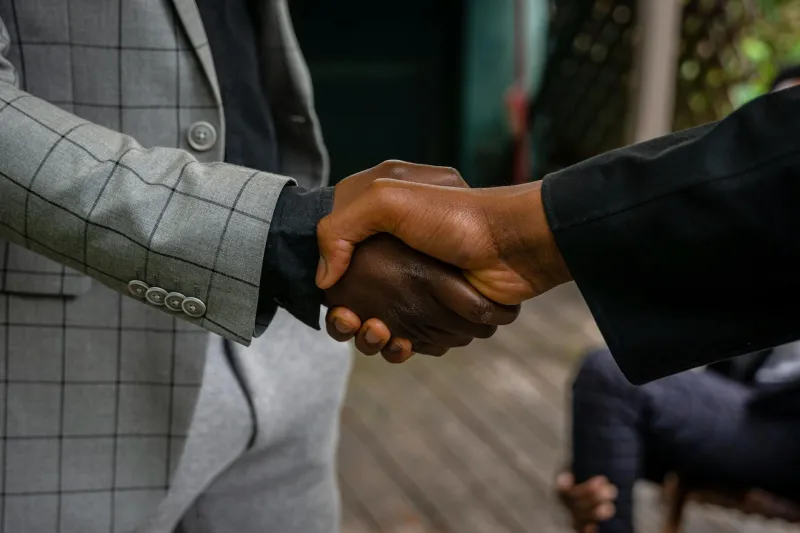
The Handshake Economy
In 1952, a farmer in Iowa could walk into the local feed store, load up his truck with $500 worth of supplies, and settle the bill with nothing more than "Put it on my account, Bill." No signatures, no credit checks, no paperwork trail. Just two men who knew each other's character, operating in a world where your reputation was literally your most valuable asset.
This wasn't unusual—it was how America did business.
From Main Street storefronts to Wall Street boardrooms, deals were sealed with handshakes and honored through social pressure. A person's word carried legal weight not because courts enforced it, but because breaking it meant social and economic exile from the community that sustained you.
When Everyone Knew Everyone
The handshake economy worked because America was a collection of interconnected small towns, even in big cities. Neighborhoods functioned like villages where reputation traveled fast and lasted long. The grocer knew your family, the banker went to your church, and the mechanic fixed your father's car before yours.
In this environment, defaulting on a deal didn't just mean losing money—it meant losing your place in the social fabric that made business possible. Word would spread through the Rotary Club, the church congregation, and the coffee shop. Within weeks, you'd find doors closing throughout your community.
Major corporations operated under similar principles. When executives from different companies met to discuss partnerships, they often concluded negotiations with a firm handshake and the understanding that "we'll work out the details later." Corporate lawyers existed, but they were consulted after agreements were made, not before.
The Paper Trail Revolution
The transformation began in the 1960s and accelerated through the following decades. Several forces converged to kill the handshake deal: increased mobility broke down tight-knit communities, corporate consolidation replaced family businesses with faceless entities, and a more litigious culture made verbal agreements legally risky.
By the 1980s, the phrase "get it in writing" had become standard business advice. What once required a conversation and a handshake now demanded written contracts, legal review, and multiple signatures. The average business transaction that took minutes in 1950 required hours of documentation by 1990.
Today's business environment would be unrecognizable to that Iowa farmer. A simple purchase order can involve multiple departments, digital signatures, liability waivers, and terms of service longer than many novels. We've built systems designed to eliminate trust from transactions entirely.
The Cost of Protection
This shift brought undeniable benefits. Written contracts protect both parties, create clear expectations, and provide legal recourse when things go wrong. In our mobile, globalized economy, you can't rely on social pressure to enforce agreements between strangers separated by continents.
But we've also lost something fundamental. The handshake economy required people to be trustworthy because trust was the foundation of economic participation. Today's contract-heavy system assumes people will cheat if given the opportunity, then builds elaborate safeguards to prevent it.
The numbers tell the story: Americans spent $310 billion on legal services in 2020, compared to just $50 billion (inflation-adjusted) in 1960. We now employ more lawyers per capita than any other nation in history, largely to manage the complexity we've created in our efforts to eliminate risk from human relationships.
What We Traded Away
The handshake economy wasn't perfect—it often excluded women, minorities, and outsiders from business networks. But it created powerful incentives for ethical behavior that our current system lacks. When your personal reputation determined your economic prospects, character mattered in ways that legal compliance doesn't replicate.
Modern business relationships are more equitable and legally protected, but they're also more transactional and less personal. We've gained security and lost community, added protection but subtracted trust.
The Trust Deficit
Surveys show that Americans' trust in institutions, businesses, and each other has declined steadily since the 1960s—precisely when the handshake economy began its decline. This isn't coincidental. When we structure society around the assumption that people can't be trusted, we create conditions where trustworthiness becomes less valuable.
The irony is striking: in trying to protect ourselves from untrustworthy people, we've built systems that make trustworthiness economically irrelevant. A company can have terrible customer service, break promises regularly, and still thrive if their legal department is competent enough to avoid lawsuits.
Finding Balance
Some modern businesses are rediscovering the power of trust-based relationships. Companies like Patagonia and REI built billion-dollar brands partly by honoring commitments that go beyond legal requirements. The sharing economy—Airbnb, Uber, eBay—relies heavily on reputation systems that echo the social accountability of the handshake era.
But these are exceptions in a business culture that has largely abandoned trust as an organizing principle. We've created the most legally sophisticated commercial system in human history, yet struggle with declining customer loyalty, employee engagement, and social cohesion.
The handshake economy is gone forever, and much of its passing represents genuine progress. But as we navigate an increasingly complex and impersonal business world, it's worth remembering what we had when a person's word was their bond—and asking whether we've gone too far in the opposite direction.