America's Lost Living Room: How We Traded Our Front Steps for Garage Doors
The Theater of Everyday Life
Every evening at six o'clock, Margaret Williams would carry her coffee cup to the front porch of her Cleveland home. It wasn't a ritual exactly—more like breathing. The porch swing creaked in a rhythm that matched the neighborhood's heartbeat: kids racing bikes down the sidewalk, Mr. Peterson watering his roses, the mail carrier stopping to chat about the weather.
That was 1952. Today, Margaret's great-granddaughter Emma lives in a suburban development where the only sound at six o'clock is garage doors closing.
When Architecture Was Social Media
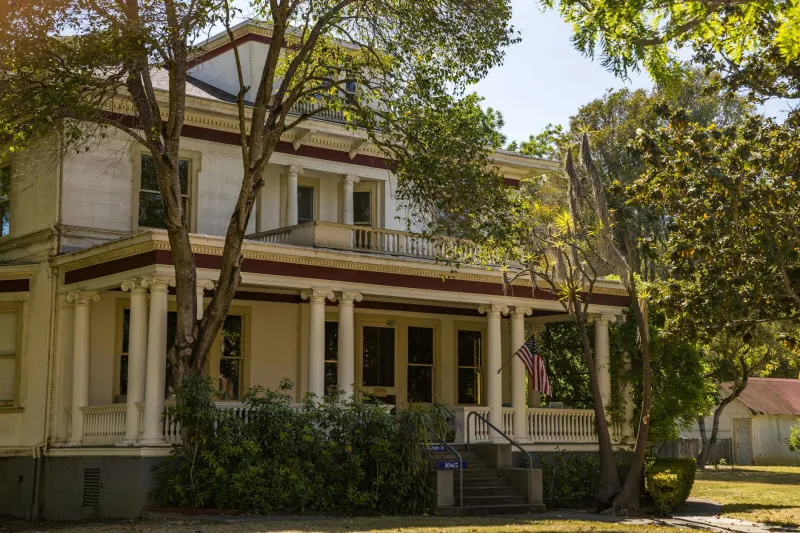
The American front porch wasn't just furniture—it was infrastructure for community life. Built deep and wide, these outdoor rooms served as the neighborhood's informal headquarters. Mothers shelled peas while keeping an eye on playing children. Fathers read newspapers while nodding hello to evening walkers. Teenagers found excuses to linger where they might catch glimpses of their crushes.
The porch created what sociologists now call "weak ties"—casual relationships that didn't demand much but provided the social fabric that held neighborhoods together. You knew Mrs. Chen was feeling better because you saw her sweeping her steps. You learned about the job opening at the hardware store because you overheard Mr. Rodriguez talking to his brother-in-law.
These weren't deep friendships necessarily, but they were connections. And connections, it turns out, were what made places feel like home.
The Great Retreat Begins
The shift started innocently enough in the 1920s with the rise of the automobile. Suddenly, Americans could live farther from their jobs, and developers began building houses with attached garages. But the real transformation came after World War II, when returning soldiers used GI Bill benefits to purchase homes in brand-new suburbs.
 Photo: GI Bill, via content.govdelivery.com
These developments promised something revolutionary: privacy. Instead of front porches that put your business on display, houses featured large picture windows that let you see out without being seen. Instead of small yards that forced interaction with neighbors, properties stretched back into private domains where families could barbecue, swim, and entertain without an audience.
The architectural message was clear: your real life happened behind your house, not in front of it.
The Rise of the Backyard Kingdom
By the 1960s, American homes had flipped inside out. The action moved from front porches to back patios, from sidewalk-facing swings to deck furniture that looked inward toward sliding glass doors. Families invested in privacy fences, underground sprinkler systems, and elaborate outdoor kitchens that rivaled restaurant setups.
The backyard became America's new outdoor living room—but this one came with a guest list.
Meanwhile, the front of the house transformed into a stage set designed for curb appeal rather than human interaction. Perfectly manicured lawns stretched from sidewalk to foundation, broken only by driveways that funneled families directly from car to kitchen without ever touching public space.
What We Lost in Translation
The numbers tell part of the story. In 1950, the average American knew 19 of their neighbors by name. Today, that number has dropped to fewer than six. But statistics can't capture what really disappeared when we abandoned our front porches.
We lost the art of casual conversation—the kind that happens when you're watering plants and someone walks by with their dog. We lost the informal neighborhood watch system that kept children safe not through surveillance cameras but through the simple presence of adults who knew which kids belonged where.
Most importantly, we lost the practice of being comfortable with strangers. The front porch taught Americans how to navigate the space between private and public, how to be neighborly without being intrusive, how to create community without surrendering autonomy.
The Modern Porch Revival
Ironically, as Americans have grown more isolated, front porches have made a comeback—at least in theory. New urbanist developments and trendy neighborhoods now feature houses with deep front porches that look exactly like their 1920s predecessors.
But something's different. These porches often sit empty, serving more as architectural decoration than social infrastructure. We've forgotten how to use them. The skills our great-grandparents took for granted—how to acknowledge a passerby, how to invite conversation without seeming pushy, how to be present in public space—have atrophied from disuse.
The Price of Privacy
Today's suburban design reflects our values perfectly: we prioritize convenience, privacy, and control over spontaneity, visibility, and chance encounters. We can drive from home to work to shopping center and back again without ever having an unplanned conversation with another human being.
Our neighborhoods are quieter, cleaner, and more beautiful than ever. They're also lonelier.
The front porch didn't disappear because it was impractical or outdated. It disappeared because we decided that the benefits of community weren't worth the costs of visibility. We chose garage doors over front doors, and in doing so, we chose isolation over connection.
The question isn't whether we can bring back the front porch—it's whether we remember why we needed it in the first place.