He Already Knew Before You Said a Word: The Doctor Who Remembered Everything
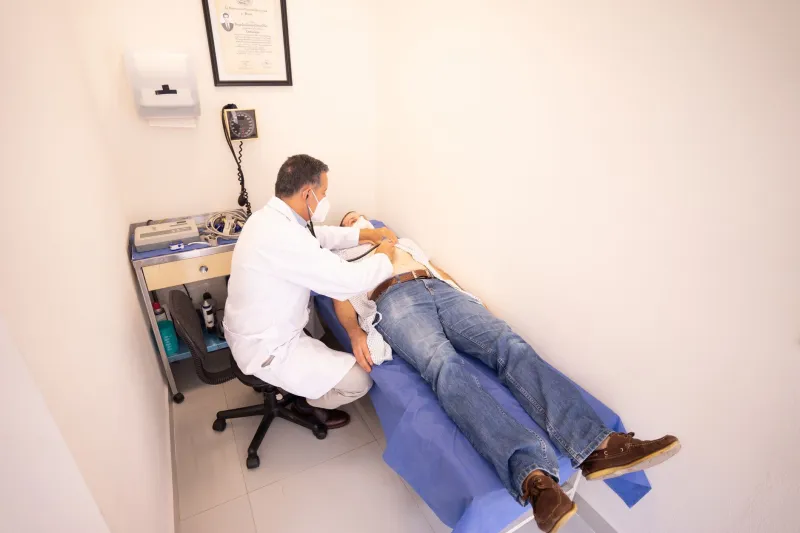
There's a particular kind of comfort that's almost impossible to describe unless you've experienced it. You walk into a doctor's office, sit down on the crinkly paper of the exam table, and before you've said much of anything, the doctor already knows. He knows you had rheumatic fever at nine. He knows your mother had thyroid problems. He knows you're the kind of patient who downplays symptoms and needs to be pressed a little. He knows, because he's been your doctor for twenty-three years.
That experience — ordinary for millions of Americans through most of the twentieth century — is now close to a historical artifact.
The Doctor as Family Institution
For much of American history, the family physician was exactly that: a figure embedded in the life of a household across generations. You didn't find a new doctor when you moved to a different insurance plan. You didn't get referred to a specialist the moment something got complicated. Your doctor handled most of it, and what he couldn't handle, he managed the handoff personally — calling ahead, explaining your history, vouching for you as a patient.
The records were handwritten. Folders thick with notes, some of them going back decades. The shorthand was personal — observations about your anxiety around needles, a note that your father had died of a heart attack at sixty-one, a reminder that you tended to wait too long before coming in. None of that was in a dropdown menu. It lived in the doctor's memory and in his own hand.
This wasn't just sentiment. It had real clinical value. A physician who has watched you for fifteen years notices things that a first-time provider simply cannot. A subtle shift in your energy. A pattern in when your back flares up. The fact that your cholesterol crept in the same direction your father's did at the same age. Longitudinal knowledge — the kind that only comes from time — is one of medicine's most powerful diagnostic tools. And we've quietly engineered most of it out of the system.
When Efficiency Became the Point
The shift didn't happen all at once. It came in waves — managed care in the 1980s, the rise of hospital systems absorbing independent practices, the explosion of specialization, and eventually the move to electronic health records that promised seamless information sharing but often delivered something closer to bureaucratic friction.
Today, the average American sees multiple providers across multiple settings with little coordination between them. You might see your primary care physician — if you're lucky enough to have one — once a year for fifteen minutes. A specialist for a specific complaint. An urgent care clinic for whatever doesn't fit the schedule. An ER if things go sideways. None of these providers have meaningfully spoken to each other. Each one is reading from the same electronic chart, but reading is not the same as knowing.
Electronic records were supposed to fix this. And in some ways they have — test results transfer faster, prescriptions are less likely to interact badly, and your records don't vanish when a practice closes. But the promise of seamless continuity has largely gone unfulfilled. Studies have repeatedly found that care coordination remains one of American medicine's most persistent failures. Patients fall through gaps between specialists. Follow-ups don't happen. Symptoms that require context get evaluated without it.
What the Relationship Actually Did
The relational dimension of medicine isn't soft or secondary. It's structural. When a patient trusts their doctor — really trusts them, built over years — they tell them things they wouldn't tell a stranger in a white coat. They mention the symptom they were embarrassed about. They admit they stopped taking the medication. They ask the question they've been sitting on for six months.
That candor changes outcomes. Research consistently shows that patients with strong, continuous relationships with a primary care provider have better health outcomes, lower hospitalization rates, and higher rates of preventive care. The relationship is not incidental to the medicine. It is part of the medicine.
The old family doctor also served another function that's easy to overlook: he was a check on unnecessary intervention. A physician who knows you well can say, with confidence, "Let's watch this for a few weeks" — because he knows your baseline, knows your history, and knows this particular symptom in the context of your particular body. Without that continuity, the default often becomes more tests, more referrals, more procedures. Caution looks different when you're working from a fifteen-minute intake form.
What Patients Are Left With
There's a specific exhaustion that comes from explaining your own medical history over and over again to people who are meeting you for the first time. Listing your medications. Recounting your surgeries. Trying to remember what year something happened. Watching a provider scroll through a screen full of data, looking for the thread of you in all of it.
Many Americans have simply stopped expecting anything different. The transactional model of care — come in, get treated for the immediate problem, leave — has become normalized. But something was lost in that normalization. Not just convenience or warmth, but a genuine clinical resource: the doctor who knew you well enough to catch what the chart missed.
Some practices are trying to rebuild this. Concierge medicine, direct primary care models, patient-centered medical homes — these are all, in different ways, attempts to restore the conditions that made continuous care possible. They're promising. They're also, for most Americans, either inaccessible or unaffordable.
The family doctor who remembered everything wasn't a luxury feature of an earlier era. He was a system that worked. We replaced him with something faster and more scalable, and we're still figuring out what we gave up to get there.