When a Stranger's Spare Room Came Without a Credit Card
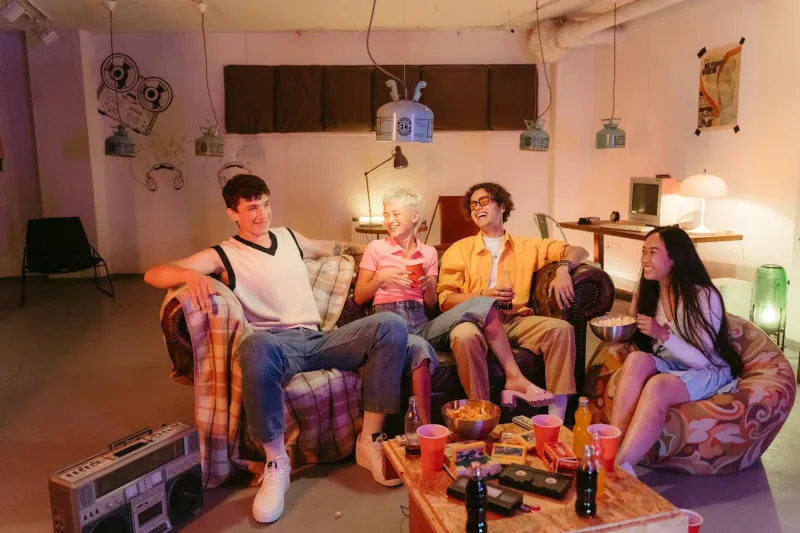
The Couch That Cost Nothing But Gratitude
In 1978, if you needed a place to crash in Denver while driving cross-country, you called your college roommate's cousin who lived there. Maybe you'd never met him, but that didn't matter. You'd show up with a six-pack and a story, sleep on his couch, and leave with directions to the best breakfast spot in town. No money changed hands. No reviews were written. No liability waivers were signed.
This wasn't unusual. It was just how Americans traveled when they couldn't afford hotels.
The Unwritten Rules of American Hospitality
The old system ran on a simple social contract: travelers brought gratitude, hosts provided shelter, and everyone understood their role. Guests arrived with small gifts—beer, flowers, or regional specialties from their hometown. They helped with dishes, played with the kids, and shared stories from the road. Most importantly, they left when they said they would.
Hosts, meanwhile, cleared out the spare room or made space on the living room floor. They offered local knowledge—which restaurants to avoid, where to get gas cheapest, shortcuts through the city. Some provided breakfast; others just pointed toward the coffee pot. The arrangement was informal but reliable, built on networks of friends, family, and acquaintances that stretched across the country.
This wasn't charity. It was reciprocal community building. The couch you crashed on in Portland might belong to someone who'd need your guest room in Phoenix next summer.
When Hospitality Became a Product
Airbnb launched in 2008, promising to monetize all that unused space Americans had been giving away for free. Suddenly, every spare bedroom became a potential revenue stream. That couch in the living room? It could earn $50 a night. The guest room that used to house visiting relatives? Prime real estate for travelers willing to pay premium rates.
The platform solved real problems. Travelers got more options than sterile hotel chains. Hosts earned extra income from space they already had. Professional standards emerged—clean sheets, reliable WiFi, accurate descriptions. The star rating system created accountability that the old handshake agreements never provided.
But something fundamental shifted in the process. Hospitality stopped being a social favor and became a financial transaction.
The Price of Professionalization
Today's sharing economy operates on different principles than the informal networks it replaced. Modern guests pay market rates, expect hotel-level amenities, and leave reviews that can make or break a host's business. Hosts optimize their spaces for profit, install keyless entry systems, and maintain detailed house rules to protect their investment.
The personal connection that once defined these exchanges has largely disappeared. Hosts often don't meet their guests face-to-face. Automated messaging systems handle check-in instructions. Properties are managed like small businesses rather than opened like homes.
The old system's inefficiencies—the awkward small talk, the uncertainty about sleeping arrangements, the obligation to be social when you just wanted to crash—have been engineered away. But those inefficiencies created something valuable: genuine human connection between strangers.
What We Lost When We Started Charging
The transformation from social hospitality to commercial accommodation changed more than just payment methods. It altered the fundamental relationship between host and guest.
In the old system, both parties were doing each other a favor. The host provided shelter; the guest brought stories, company, and future reciprocity. Neither person was purely a customer or service provider. Both were participants in a community network.
Modern platforms create clearer boundaries but less authentic relationships. The five-star rating system replaced the messy human judgment calls that once governed these interactions. Professional management replaced personal trust. Legal protections replaced social obligation.
The efficiency gains are undeniable. You can now book a room in any city within minutes, read detailed reviews from previous guests, and know exactly what amenities to expect. But you're unlikely to leave with a local friend or an invitation to return.
The Economics of Trust
The old system worked because it operated outside the formal economy. Nobody calculated the market value of a couch or charged cleaning fees for washing extra sheets. The exchange was social rather than financial—governed by norms of reciprocity rather than supply and demand.
This informal economy required high levels of social trust and dense networks of personal connections. You vouched for the friends you recommended to hosts. Hosts trusted your judgment about the travelers you sent their way. Bad actors were quickly identified and excluded from the network.
The sharing economy scaled this system globally but lost its social foundation in the process. Platform algorithms replaced personal recommendations. Financial incentives replaced social obligations. Professional standards replaced community accountability.
When Everything Became a Business
The monetization of spare rooms reflects a broader shift in American culture. Activities that once existed outside the market economy—giving directions, sharing tools with neighbors, offering rides to friends—have increasingly become commercial services.
This transformation created new opportunities but also new expectations. Every interaction now has a potential price tag. Every resource can be optimized for profit. Every relationship can be mediated by an app.
The result is a more efficient system but a less generous society. We've gained professional standards and lost personal connections. We've created economic opportunities and eliminated social obligations.
The couch is still there. But now it comes with a price list instead of a welcome.