The Lost Art of Productive Boredom: What Americans Did Before Pocket Entertainment

When Waiting Meant Thinking
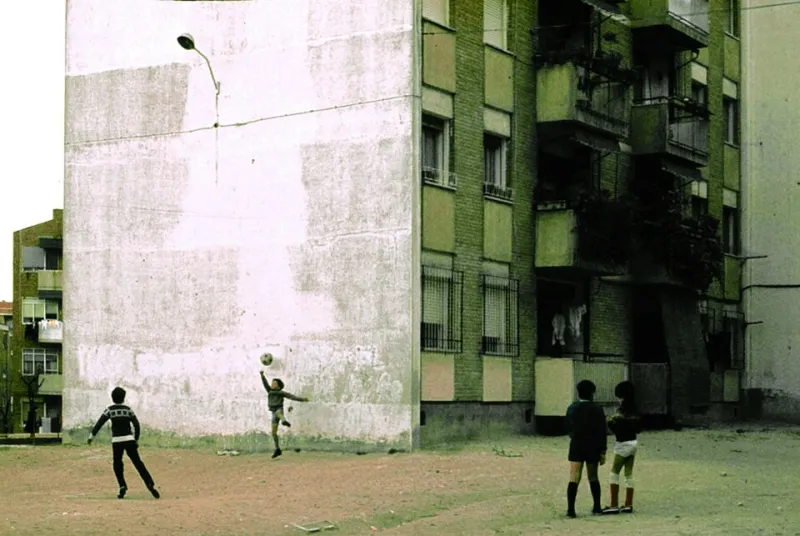
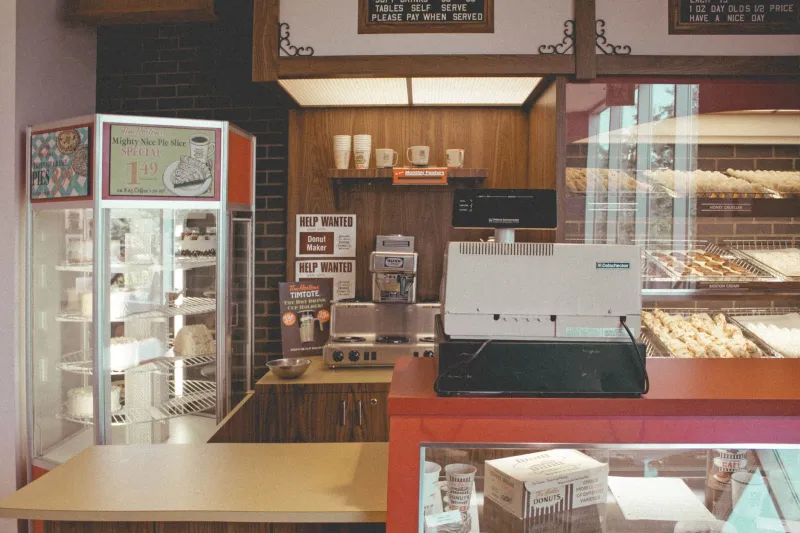
The dentist's office in 1975 was a masterclass in enforced meditation. You sat in a vinyl chair, stared at wood-paneled walls, and confronted the most terrifying opponent of all: your own thoughts. No Instagram to scroll, no games to play, no texts to answer. Just you, a stack of six-month-old magazines, and the peculiar sound of dental equipment humming through thin walls.
Americans once possessed a skill that seems almost supernatural today: the ability to wait productively. Not just enduring the passage of time, but using it for the quiet mental work that happens only when external stimulation stops. We called it boredom, but it was actually something more valuable — unstructured thinking time that our brains desperately needed and rarely get today.
The Accidental Classroom
Every waiting room was an informal school for patience, observation, and human connection. The DMV taught you about bureaucracy and the full spectrum of human diversity. The auto shop introduced you to small talk with strangers who shared your mechanical misfortune. The doctor's office provided a master class in anxiety management and the art of sitting still.
These spaces operated on different rules than the rest of life. Time moved slowly. Productivity was impossible. Your only options were internal: reflect, observe, or engage with whoever else was trapped in the same temporal prison.
"I solved more problems sitting in waiting rooms than I ever did at my desk," says Robert Chen, a retired engineer from Portland. "Your mind wanders when it's not being constantly fed. You connect dots you never would have connected otherwise."
 Photo: Robert Chen, via media1.popsugar-assets.com
The Democracy of Discomfort
Waiting rooms were remarkably egalitarian spaces. The CEO and the construction worker experienced the same fluorescent lighting, the same uncomfortable chairs, the same slow-moving clock. Wealth couldn't buy you out of the wait — it could only buy you a slightly more comfortable chair in a slightly nicer office.
This shared experience of enforced stillness created unexpected connections. Strangers bonded over mutual impatience. Parents shared parenting tips while their children played with the same broken toys. Elderly patients became impromptu wisdom dispensers for younger visitors wrestling with life decisions.
The conversations that emerged from shared waiting weren't planned or strategic — they were organic, honest, and often surprisingly meaningful. When you're both stuck for an unknown amount of time, social barriers tend to dissolve.
The Mental Muscles We've Lost
Modern neuroscience has revealed what our grandparents knew intuitively: boredom is essential for mental health. The brain's default mode network — the neural system that activates during rest — is responsible for self-reflection, moral reasoning, and creative insight. But this system only engages when we're not actively consuming information.
The pre-smartphone waiting room was a perfect environment for default mode activation. With limited external stimulation, minds naturally turned inward. People processed recent experiences, planned for the future, and made unexpected connections between disparate ideas.
Today's waiting rooms tell a different story. Walk into any medical office and you'll see a dozen people staring at screens, thumbs moving in practiced scrolling motions. The external stimulation never stops, which means the internal processing never begins.
The Art of Observation
Without phones to retreat into, waiting room veterans developed sophisticated observation skills. They noticed details: the receptionist's mood, the other patients' anxiety levels, the subtle signs that indicated how much longer the wait might be.
This observational practice extended beyond the waiting room. People who learned to watch and listen in these neutral spaces became better at reading social situations, understanding nonverbal communication, and picking up on environmental cues that others missed.
"You learned to read a room," explains Dr. Sarah Martinez, a family physician who's practiced for thirty years. "Patients used to come in with better social awareness because they'd spent years practicing it in waiting rooms. Now everyone's looking down at their phones, missing all the human information that's right in front of them."
 Photo: Dr. Sarah Martinez, via codinglap.com
The Patience Paradox
Perhaps the most valuable skill that waiting rooms taught was patience itself — not just tolerance for delay, but comfort with uncertainty. You didn't know exactly when your name would be called, but you knew it eventually would be. This uncertainty required a kind of faith and acceptance that modern life rarely demands.
Today's technology has eliminated most uncertainty from waiting. Apps tell us exactly how long the wait will be. We can check in remotely and arrive at precisely the right moment. But in solving the problem of unknown wait times, we've also eliminated the practice of sitting with uncertainty — a skill that's useful far beyond waiting rooms.
What We've Gained and Lost
Modern waiting is undeniably more efficient and entertaining. You can answer emails, catch up on news, or video chat with friends while waiting for your appointment. Productivity never has to stop, boredom never has to begin.
But efficiency isn't the only measure of value. The old-style waiting room provided something that our hyperconnected world struggles to replace: regular opportunities for mental rest, social connection with strangers, and the kind of deep thinking that only happens when external stimulation stops.
The Quiet Revolution
Some healthcare providers are experimenting with "phone-free" waiting areas, recognizing that constant connectivity might not serve their patients' best interests. A few meditation centers and wellness clinics have embraced the radical concept of uncomfortable chairs and minimal stimulation, betting that people are hungry for the kind of mental space that waiting rooms once provided.
These experiments suggest that Americans might be ready to rediscover the lost art of productive boredom — not as a punishment to endure, but as a skill to cultivate.
The next time you're tempted to pull out your phone in a waiting room, consider the alternative: sitting with your thoughts, observing your surroundings, maybe even talking to a stranger. It might feel uncomfortable at first — we're out of practice. But somewhere in that discomfort lies the quiet mental work that previous generations took for granted and that our overstimulated minds desperately need to remember how to do.