The Unsupervised Hour: When American Kids Governed Their Own Kingdoms
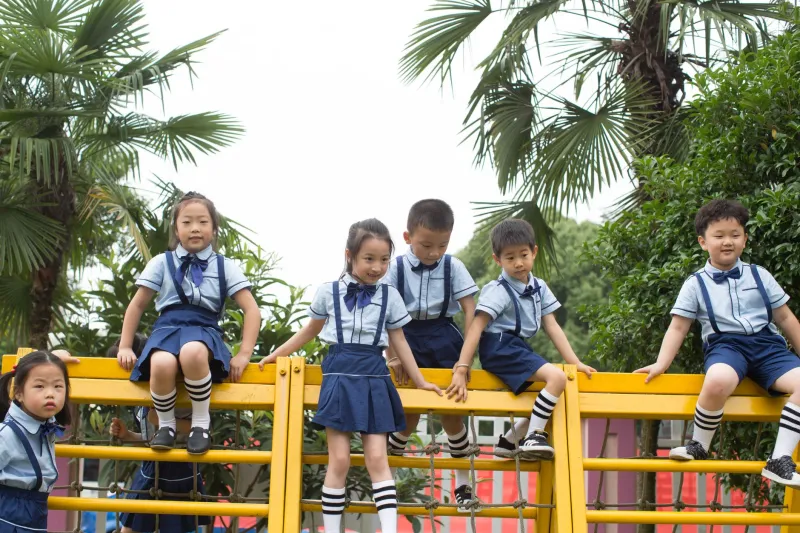
Every weekday at 11:47 AM, something remarkable happened at American elementary schools across the country. A bell would ring, classroom doors would burst open, and two hundred children would pour onto the playground with absolutely no agenda except the one they created for themselves.
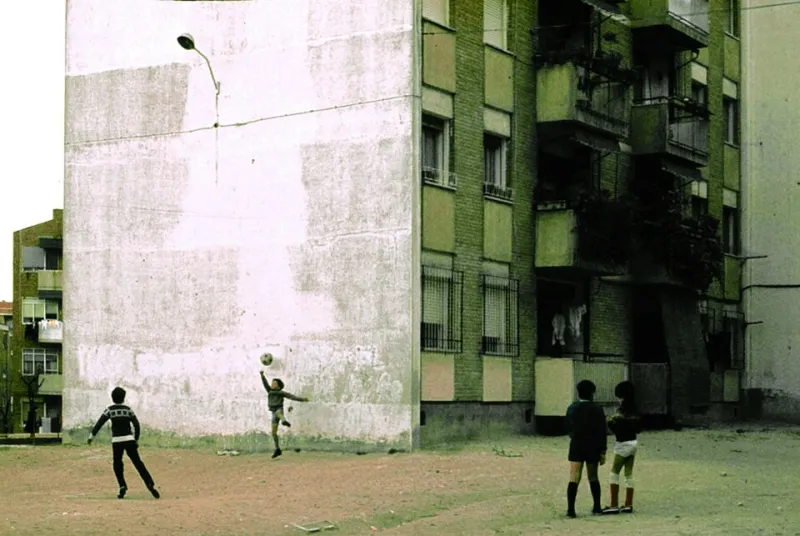
No adult stood with a clipboard organizing activities. No counselor mediated disputes over kickball rules. No safety coordinator ensured everyone felt included. For thirty precious minutes, American children operated their own society — complete with its own economy, justice system, and social hierarchy.
That world has vanished so completely that today's parents struggle to imagine it ever existed.
When Children Were Their Own Supreme Court
In 1975, if two fourth-graders disagreed about whether a catch was fair during a game of wall ball, they didn't run to the playground monitor. They argued, negotiated, and eventually reached a resolution — or they didn't, and the game ended. Either way, they learned something about conflict resolution that no adult intervention could teach.
Playground disputes were settled through a complex system of peer mediation that children instinctively understood. The kid who always called "do-overs" eventually found himself excluded from games. The one who bent rules in his favor discovered that reputation mattered more than winning. Popular kids learned that their social capital came with responsibilities — if you wanted to be picked for teams, you had to be fair when picking others.
These weren't lessons from a curriculum. They emerged from the natural friction of unstructured social interaction, the way sparks emerge from flint and steel.
The Economics of Marbles and Social Status
Playground society had its own thriving economy. Trading cards changed hands based on complex valuations that shifted weekly. Marble games created winners and losers with real consequences. Jump rope hierarchies determined who got to "turn" and who had to wait.
Children learned about scarcity, negotiation, and fair exchange without a single lesson plan. The kid who hoarded all the good jump ropes discovered that monopolies breed resentment. The one who shared freely found himself welcome in any game. Market forces operated with brutal efficiency in the sandbox economy.
More importantly, children learned that social capital was earned, not granted. Popularity couldn't be legislated or mandated — it had to be built through consistent behavior over time.
When Conflict Built Character
Modern playgrounds operate under a philosophy that conflict should be prevented rather than navigated. Adult supervisors intervene at the first sign of disagreement, smoothing over disputes before children can work through them independently.
The old playground was messier. Kids fought, made up, fought again, and eventually learned to coexist. They discovered that some conflicts weren't worth having, that compromise usually beat confrontation, and that holding grudges was exhausting.
Most crucially, they learned resilience through experience rather than instruction. The child who got picked last for teams every day eventually developed either the thick skin to endure it or the skills to improve their situation. Both outcomes required a kind of emotional muscle that only develops under stress.
The Great Safety Revolution
By the 1990s, liability concerns began reshaping American playgrounds. Monkey bars were deemed too dangerous. Seesaws created injury risks. Games like dodgeball were banned for being too aggressive. Gradually, the physical equipment became safer, more inclusive, and infinitely more boring.
But the real change wasn't in the equipment — it was in the supervision. Adult oversight increased until every moment of recess was monitored, guided, and controlled. Conflict resolution became an adult responsibility rather than a childhood skill.
Today's elementary school children experience recess as a series of organized activities with clear rules and constant supervision. They're safer, certainly. But they're also missing something their grandparents took for granted: the experience of governing themselves.
What We Lost in Translation
The transition from unsupervised to supervised play wasn't malicious — it was motivated by genuine concerns about safety, inclusion, and fairness. Nobody wanted children to be hurt, excluded, or traumatized by playground experiences.
But in solving those problems, we inadvertently created new ones. Children who never navigate conflict independently struggle to do so as adults. Kids who never experience social rejection don't develop the resilience to handle it later. Students who never organize their own activities remain dependent on external structure throughout their lives.
The old playground was unfair, sometimes cruel, and occasionally dangerous. It was also the place where American children learned that they could solve problems, lead groups, and bounce back from failure — lessons that no amount of adult instruction could replicate.
The Drift Toward Structure
The transformation of American recess reflects a broader cultural shift toward risk aversion and adult-mediated childhood experiences. We've gained safety and lost independence, achieved inclusion at the cost of resilience.
Today's children are more protected than any generation in history. They're also more anxious, more dependent on external validation, and less confident in their ability to navigate social situations without adult guidance.
The playground that raised itself is gone, replaced by careful supervision and structured activities. We told ourselves we were making childhood better. We never asked whether we might be making children worse.