When Dinner Conversation Actually Changed Minds Instead of Hardening Them
The Nightly News Exchange
Every evening at 6:30, the Morrison family gathered around their kitchen table in suburban Cleveland. Dad brought stories from the factory floor. Mom shared gossip from the PTA meeting. Teenage Sarah reported on the drama unfolding at her high school. Ten-year-old Mike contributed whatever fascinating facts he'd learned that day.
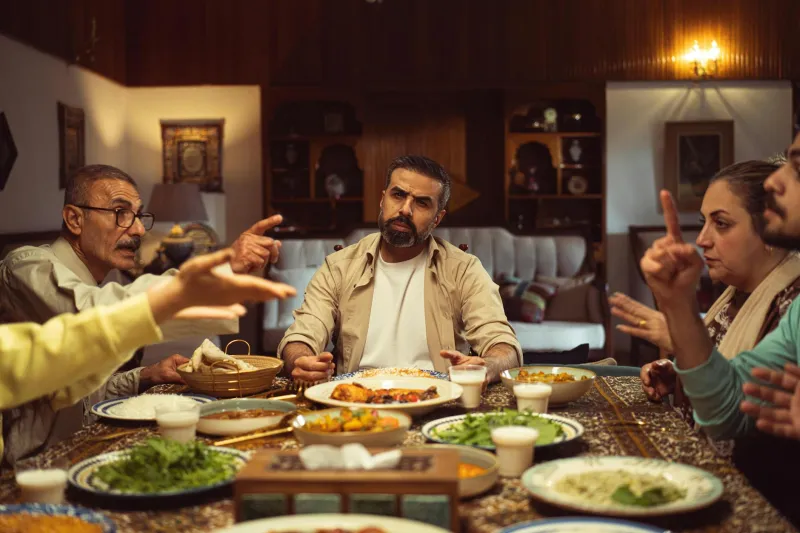
 Photo: Morrison family, via i.pinimg.com
None of them had spent the day consuming the same information. Dad's worldview was shaped by union newsletters and conversations with coworkers. Mom's perspective came from neighborhood networks and local volunteer work. The kids absorbed different social dynamics and academic subjects. When they sat down together, they were genuinely sharing different pieces of the same world.
This information exchange happened millions of times each night across America. Families served as tiny news networks, with each member contributing unique insights from their separate daily experiences.
When Everyone Knew Different Things
The pre-internet dinner table functioned as a clearinghouse for diverse information sources. Family members encountered different people, consumed different media, and participated in different communities throughout their day. Dinner was when these separate streams of information merged.
Dad might report that layoffs were rumored at the plant, while Mom mentioned that the school board was considering budget cuts. Sarah could explain why her classmates were upset about the new dress code, while Mike shared what his teacher had said about the upcoming election. Each person brought genuine news that others hadn't already heard.
These conversations weren't just social bonding—they were information processing. Families collectively made sense of their community by pooling their individual observations. The dinner table served as a primitive but effective social media platform, with each member curating content from their personal network.
The Art of Changing Your Mind
Because family members were encountering different information throughout their day, dinner conversations involved genuine discovery. You might sit down believing one thing and leave the table thinking differently after hearing your sister's perspective or your father's experience.
This wasn't because family members were particularly persuasive debaters. It was because they were sharing firsthand information that others hadn't already processed and formed opinions about. When your brother described what he'd witnessed at the town meeting, you were hearing primary source material, not competing interpretations of the same widely-reported events.
The social dynamics of family meals also encouraged open-mindedness. You couldn't dismiss your mother's observations the way you might reject a stranger's opinion. You had to engage with information that challenged your assumptions because it came from people you trusted and couldn't easily unfriend.
When Algorithms Started Setting the Table
Today's dinner conversations operate under fundamentally different conditions. Every family member arrives at the table having consumed largely the same information, filtered through personalized algorithms that reinforce existing beliefs rather than challenging them.
Dad spent his lunch break reading articles that confirmed his political worldview. Mom scrolled through social media posts that aligned with her values. The teenagers absorbed content specifically curated to match their demonstrated preferences. By dinnertime, everyone has already formed opinions about the day's events based on nearly identical information sources.
The result is a strange paradox: families have access to more information than ever before, but less genuine exchange of ideas. Instead of sharing different perspectives on the same reality, family members often arrive at dinner defending different versions of reality itself.
The Echo Chamber at Your Kitchen Table
Modern families don't just consume similar information—they consume information designed to confirm what they already believe. Social media algorithms and personalized news feeds create separate realities for each political tribe, age group, and interest category.
When everyone at the dinner table has spent their day reading content that validates their existing opinions, conversation becomes less about sharing information and more about competing to see whose pre-formed conclusions will dominate. The dinner table transforms from a forum for collective sense-making into a battlefield for individual certainty.
This dynamic is particularly pronounced during political seasons, when family members don't just disagree about policies—they disagree about basic facts. The shared information foundation that once made productive disagreement possible has been fractured into incompatible worldviews.
The Lost Art of Productive Disagreement
The old dinner table conversations included plenty of arguments, but they were different kinds of arguments. Family members disputed interpretations of shared experiences rather than defending entirely separate realities. They argued about what events meant, not whether events had actually occurred.
These disagreements could be productive because they operated from a common factual foundation. When Dad and teenage Sarah argued about whether the local factory closure was good or bad for the community, they at least agreed that the factory was actually closing. Their argument focused on implications and values rather than basic reality.
Modern dinner table arguments often begin with disputes about fundamental facts. Did the event in question actually happen? Are the reported numbers accurate? Is the source reliable? By the time families work through these basic epistemological questions, there's little energy left for meaningful discussion about what any of it means.
When Information Became Ammunition
The transformation of dinner conversation reflects a broader shift in how Americans consume and process information. Information used to be scarce and therefore valuable for its own sake. People shared facts because facts were useful, regardless of whether they supported your preferred conclusions.
Now information is abundant and weaponized. People share facts because they prove points, not because they're inherently interesting or useful. The dinner table conversation becomes less about collective learning and more about individual positioning.
Family members arrive at dinner armed with carefully curated evidence for predetermined conclusions. Instead of exploring questions together, they prosecute cases against each other. The goal shifts from understanding to winning.
The Feedback Loop of Certainty
Perhaps most significantly, modern information consumption creates a feedback loop that makes genuine conversation increasingly difficult. When you spend all day consuming content that confirms your beliefs, you become more certain of those beliefs, not more curious about alternative perspectives.
This algorithmic certainty makes it harder to engage productively with family members who have been fed different information diets. Their perspectives don't just seem wrong—they seem incomprehensible. How could any reasonable person believe something so obviously false?
The old dinner table conversations were possible partly because family members maintained some intellectual humility. They knew their information was incomplete and their perspectives were limited. They came to the table curious about what others had observed and experienced.
The Table That Used to Teach
The traditional family dinner table served as an informal school for democratic citizenship. Children learned how to listen to different perspectives, ask clarifying questions, and change their minds when presented with compelling evidence. They observed adults modeling intellectual curiosity and productive disagreement.
These skills were essential for participating in a diverse democracy where people with different backgrounds and experiences needed to find common ground. The dinner table was where Americans learned that disagreement didn't have to mean disrespect, and that changing your mind was a sign of wisdom, not weakness.
Today's dinner conversations often teach different lessons: that disagreement is dangerous, that certainty is strength, and that people who think differently are fundamentally unreasonable. These are poor preparation for democratic participation in a pluralistic society.
Setting a Different Table
The challenge isn't nostalgia for a simpler time when families agreed about everything. The old dinner table conversations included plenty of conflict and tension. The difference was that they were conflicts over shared problems rather than battles between separate realities.
Restoring productive dinner conversation requires recognizing what we've lost: the habit of genuine curiosity about other people's experiences, the intellectual humility to admit when we don't know something, and the social skills necessary for disagreeing without demonizing.
The dinner table is still there. The question is whether we can remember how to use it for building understanding rather than hardening divisions. The stakes are higher than family harmony—they're about whether Americans can still learn from each other at all.