When Kids Did Homework Alone and Parents Stayed Out of It
The Bedroom Door That Closed at 7 PM
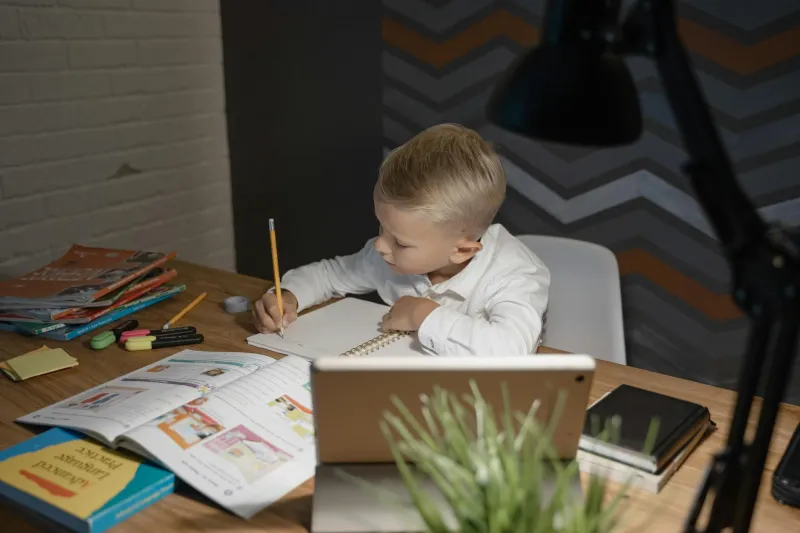
Every weeknight in 1985, millions of American children performed the same ritual. They'd clear the dinner dishes, grab their backpack, and disappear behind a bedroom door until homework was done. Parents might holler "Lights out!" at bedtime, but the hours in between belonged entirely to the kid and their textbooks.
That world feels impossible now. Today's parents live inside their children's academic universe, juggling multiple apps to track assignments, deciphering new math methods that make no sense, and staying up past midnight helping with projects that somehow require a trip to Michaels craft store.
When Teachers Taught and Parents Parented
The division of labor used to be crystal clear. Teachers handled everything that happened between 8 AM and 3 PM. Parents handled everything else. If your kid struggled with fractions, that was the teacher's problem to solve during school hours. If they forgot their lunch money, that was a life lesson in responsibility.
Homework existed, but it looked different. A worksheet or two. Maybe some reading. The instructions were simple enough that a ten-year-old could figure them out without a parent hovering nearby, ready to explain the assignment requirements.
Parents rarely knew what their children were learning day-to-day unless report cards arrived every nine weeks. There were no online gradebooks, no daily email updates, no apps sending push notifications about missing assignments. The only time parents got involved was when something went seriously wrong.
The Folder That Changed Everything
Somewhere in the 1990s, the homework folder appeared. Suddenly, assignments came with detailed instruction sheets explaining what parents needed to do. "Help your child research Native American tribes." "Assist with the volcano project." "Review multiplication tables nightly."
What started as occasional parental involvement gradually became an expectation. Teachers began designing assignments that explicitly required adult participation. Science fair projects grew more elaborate. Book reports needed to be typed and printed. Math homework came with YouTube links for parents who didn't understand the new methods.
The boundary between school and home didn't just blur—it disappeared entirely.
The Digital Leash That Never Lets Go
Today's parents carry their child's entire academic life in their pocket. PowerSchool, Google Classroom, Seesaw, ClassDojo—a constellation of apps that deliver real-time updates about grades, behavior, and assignments. Parents can see that their seventh-grader got a 73 on yesterday's quiz before the kid even gets home from school.
This constant connection has created a new kind of anxiety. Parents refresh grade portals obsessively, email teachers about assignments, and schedule tutoring sessions for subjects they barely understand themselves. The homework that once took thirty minutes now consumes entire evenings as families struggle through projects designed for collaborative learning.
When "Helping" Became Managing
The language around homework reveals how dramatically expectations have shifted. Parents don't just "help" anymore—they "support," "facilitate," and "partner with educators." They manage assignment calendars, break down long-term projects into daily tasks, and create elaborate systems for tracking due dates.
Many parents report feeling like unpaid teaching assistants. They watch Khan Academy videos to understand their child's math homework. They research photosynthesis to help with science projects. They become experts in subjects they haven't studied in decades, all while juggling their own full-time jobs.
The Tutoring Economy That Didn't Exist
In 1985, tutoring was for kids who were failing. Today, it's standard equipment for middle-class childhood. Kumon centers dot suburban strip malls. Private tutors charge $50 an hour to help fourth-graders with homework that previous generations completed independently.
The rise of tutoring reveals something important: homework has become too complex for many families to navigate alone. When parents with college degrees can't help their elementary schoolers with math problems, something fundamental has changed about the nature of childhood education.
What We Lost When the Door Stayed Open
The old system wasn't perfect, but it taught children something valuable: how to struggle through problems independently. Kids learned to read instructions carefully, manage their time, and take responsibility for their work. When they forgot an assignment, they faced the consequences directly rather than having a parent swoop in to fix the problem.
That independence came with a cost—some kids who needed extra help didn't get it. But it also came with a benefit that's harder to measure: children learned that their education belonged to them, not their parents.
The Drift We Didn't Notice
The transformation happened gradually, one homework folder at a time. Parents who wanted to be involved in their children's education found themselves pulled deeper into academic management roles they never expected to play. Teachers, facing pressure to engage families, designed assignments that required parental participation.
Nobody planned for parents to become homework supervisors. It just happened, assignment by assignment, app by app, until an entire generation of children grew up expecting adult help with work that previous generations tackled alone.
Today, when a kid closes their bedroom door to do homework, there's a good chance their parent is on the other side of it, laptop open, ready to help decode whatever academic puzzle awaits. The quiet independence of childhood learning has drifted away, replaced by a family project that never really ends.