When Flying Was Theater: The Lost Ceremony of American Air Travel
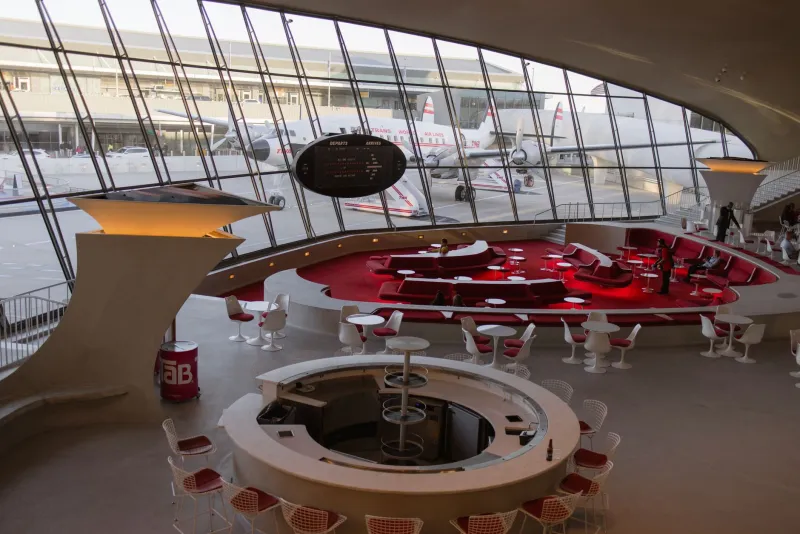
In 1963, stepping aboard a TWA Constellation bound for Los Angeles felt like entering a floating cocktail party at 30,000 feet. Passengers wore their finest clothes — men in pressed suits and polished shoes, women in dresses and heels that would be considered formal wear today. Flight attendants, known then as stewardesses, served five-course meals on real china with actual silverware.
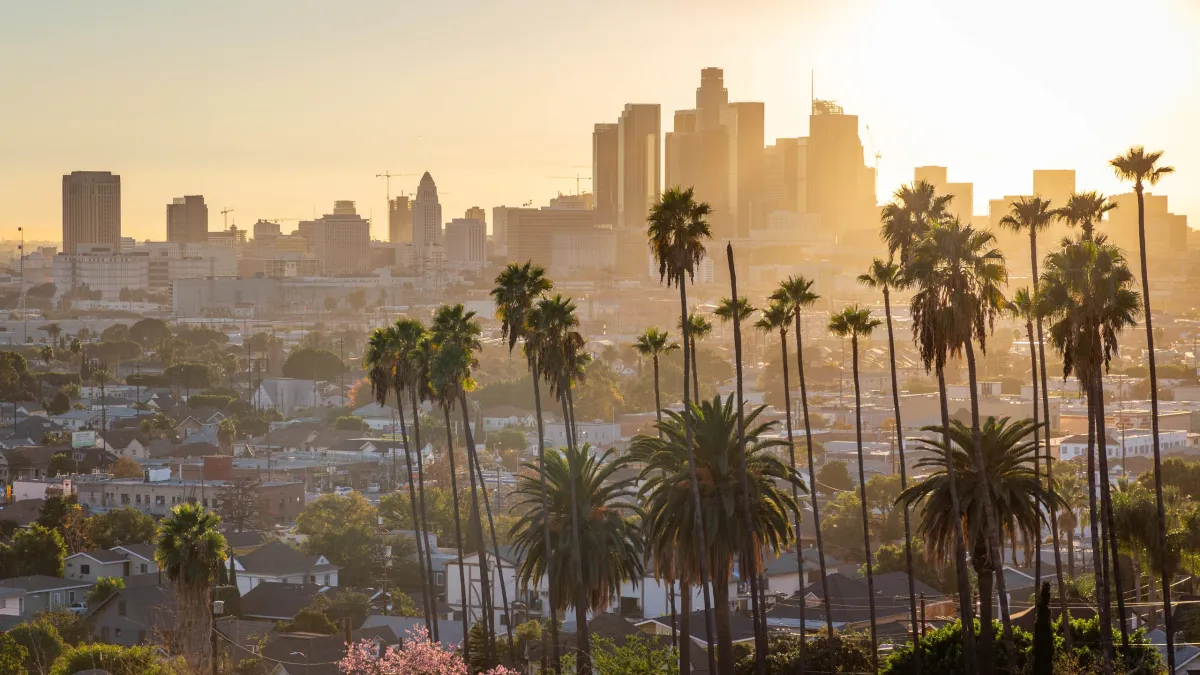 Photo: Los Angeles, via a.travel-assets.com
 Photo: TWA Constellation, via live.staticflickr.com
The ticket in your pocket represented more than transportation; it was admission to an exclusive club that most Americans could only dream of joining.
Today, that same route is traveled by passengers in pajama pants and flip-flops, eating $12 sandwiches wrapped in plastic while crammed into seats that would be considered torture devices by 1960s standards. The transformation of American air travel tells the story of how we democratized the skies — and lost something ineffable in the process.
The Golden Age of Getting There
Flying in the 1960s was expensive, exclusive, and extraordinary. A round-trip ticket from New York to California cost the equivalent of $3,000 today, putting air travel firmly in luxury territory. Airlines competed not on price but on service, amenities, and the overall experience of flight.
Pan Am advertised itself as "The World's Most Experienced Airline," while TWA promised to "Fly the Friendly Skies." These weren't empty slogans — they were promises of an experience that justified the premium price.
 Photo: Pan Am, via msbakery.com
Passengers arrived at airports dressed as if they were attending the theater, because in many ways, they were. Flying was performance art, with clearly defined roles for everyone involved.
The Ritual of Departure
Check-in was a personal interaction with agents who knew your name and remembered your preferences. There were no security lines, no shoe removal, no liquid restrictions. You simply walked to your gate, where ground crews in crisp uniforms prepared your aircraft with military precision.
Boarding was ceremonial. Passengers were welcomed individually, shown to their seats, and offered complimentary champagne before takeoff. Carry-on luggage was limited to what you could reasonably hold, and overhead bins were spacious enough for actual suitcases.
The aircraft itself was designed for comfort rather than efficiency. Seats were wider, pitched farther apart, and upholstered in real fabric. Windows were larger, ceilings higher, and aisles wide enough for two people to pass comfortably.
Dining at Altitude
Meal service in the golden age of flying resembled fine dining more than fast food. Passengers received printed menus listing multiple courses, wine selections, and even cigars for after-dinner relaxation. Meals were prepared by chefs, not reheated in microwave ovens.
Stewardesses carved roast beef tableside, served coffee from silver pots, and offered hot towels before meals. The service was attentive without being intrusive, professional without being impersonal.
Even the presentation mattered. Food arrived on real plates with cloth napkins and metal utensils. Wine was served in actual glasses, not plastic cups. The entire experience reinforced the idea that flying was special, worthy of ceremony and attention.
The Human Touch
Airline employees in the 1960s were trained to provide service that today seems almost impossibly personal. Stewardesses knew passengers' names, remembered their drink preferences, and took genuine interest in their comfort.
Pilots often walked through the cabin before departure, introducing themselves and explaining the route. They made announcements that were informative and reassuring rather than scripted and robotic.
Ground crews took pride in their work, understanding that they were part of an experience that passengers would remember long after landing. Every interaction was an opportunity to reinforce the airline's reputation for excellence.
The Economics of Exclusivity
The golden age of flying worked economically because airlines served a small, affluent market willing to pay premium prices for premium service. Government regulation kept fares artificially high while limiting competition, allowing airlines to focus on service quality rather than cost cutting.
This system was elitist by design. Air travel was reserved for business executives, wealthy families, and special occasions. The average American flew rarely if ever, making each flight feel momentous.
Airlines competed by offering better food, more comfortable seats, and superior service. Since they couldn't compete on price, they had to compete on experience.
The Deregulation Revolution
Everything changed in 1978 when Congress deregulated the airline industry, unleashing market forces that had been constrained for decades. Suddenly, airlines could set their own fares and routes, leading to intense price competition that transformed flying from luxury service to mass transportation.
The results were dramatic and immediate. Fares plummeted, making air travel accessible to middle-class Americans for the first time. But lower prices meant thinner margins, forcing airlines to cut costs wherever possible.
Service standards that had seemed essential suddenly became unaffordable luxuries. Free meals disappeared, seat pitch decreased, and the personal touch gave way to efficiency-focused operations.
The New Normal
Modern air travel prioritizes getting passengers from point A to point B as cheaply as possible. Airlines compete primarily on price, with service quality becoming a secondary consideration for most travelers.
The boarding process now resembles a cattle call, with passengers grouped by arbitrary categories and herded onto aircraft through crowded jetways. Security theater has added hours to the travel experience while contributing nothing to the sense of occasion that once made flying special.
Seats have shrunk to accommodate more passengers per flight, while amenities have been stripped away or converted into fee-generating opportunities. The $5 bag of peanuts has replaced the five-course meal as the symbol of in-flight dining.
The Democracy Dilemma
Deregulation achieved its primary goal: making air travel accessible to ordinary Americans. Millions of people who could never have afforded to fly in 1965 now take multiple trips per year. The skies have been democratized in ways that would have seemed impossible during the golden age.
But democratization came at a cost that's harder to quantify. We lost the sense of occasion that made flying memorable, the personal service that made passengers feel valued, and the attention to detail that turned transportation into experience.
The question isn't whether deregulation was right or wrong — it's whether we could have found a way to make flying accessible without making it miserable.
What We Traded Away
The transformation of air travel reflects broader changes in American culture and economics. We've become a society that values efficiency over experience, access over excellence, and price over presentation.
The golden age of flying was elitist and exclusionary, but it was also aspirational. It represented a standard of service and attention to detail that made ordinary moments feel extraordinary.
Today's air travel is democratic and affordable, but it's also dehumanizing and stressful. We've gained access to the skies while losing the magic of flight.
The theater of air travel is gone, replaced by the logistics of mass transportation. We can fly anywhere for less money than ever before, but we've forgotten why that might be worth celebrating.