Sealed With Something Real: The Quiet Power of a Letter You Actually Had to Mean
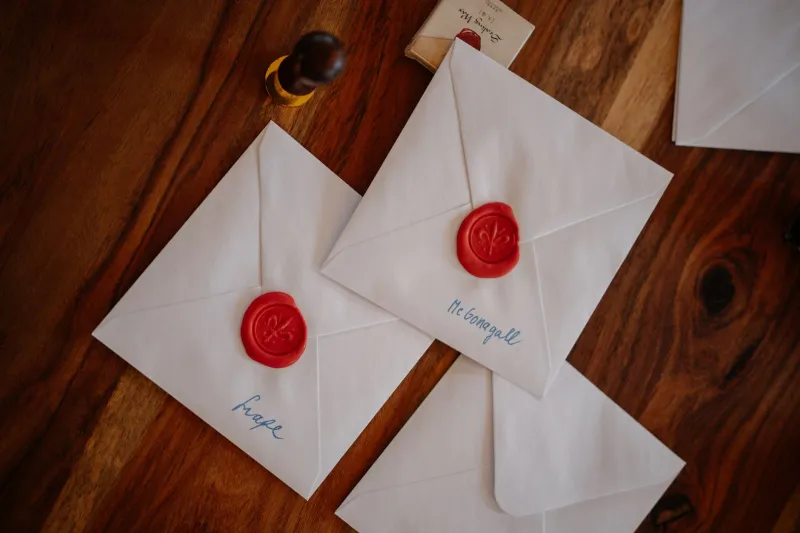
Somewhere in a shoebox in a closet, there's probably a rubber-banded stack of letters that someone in your family kept. Birthday cards with handwritten notes inside. A postcard from a road trip. Maybe a letter from a grandparent who's no longer here. Nobody saves old text threads in a shoebox. Nobody frames a Slack message.
There's a reason for that.
Not so long ago — and we're not talking ancient history here — staying in touch with someone who lived more than a few miles away required genuine effort. You had to sit down. Find paper. Think about what you actually wanted to say. Write it out, probably cross something out, maybe start over. Fold it, seal it, address it by hand, and then physically carry it somewhere to send. The whole process could take an hour just to produce a single page. And then you'd wait days, sometimes weeks, to hear back.
That slowness wasn't a flaw. It was the feature.
The Ritual Nobody Noticed Until It Was Gone
Choosing a card used to be its own small act of care. You'd stand in the Hallmark aisle for ten minutes, flipping through options, trying to find the one that felt right for the specific person you had in mind. Too sentimental? Too jokey? You'd know it when you found it. Then came the stamp — and even that had some personality to it. Post offices used to carry commemorative stamps featuring everything from national parks to jazz musicians, and picking one that matched the recipient was a minor, unspoken gesture that people actually noticed.
The walk to the mailbox. The satisfying clunk of the lid. The letting go.
There was something almost ceremonial about it. You couldn't unsend a letter. Whatever you wrote was committed to paper and ink, traveling through rain and sorting facilities and postal trucks to arrive in someone's actual hands. The permanence of it changed how people wrote. You chose your words more carefully when you knew they'd be held, re-read, maybe kept.
Compare that to today. A text takes four seconds and can be deleted. An email arrives before you've finished your coffee. A DM disappears in a day if you want it to. Speed is everything, and intentionality — the idea that reaching out required something from you — has mostly evaporated.
What the Delay Actually Did
Here's something worth sitting with: the delay between sending and receiving a letter wasn't dead time. It was anticipation. You mailed something and then you wondered. Did it arrive? What will they think? Will they write back? That gap created a kind of emotional investment in the exchange that instant communication simply can't replicate.
When a letter finally arrived, it meant something different than a notification ping. You'd recognize the handwriting on the envelope before you even opened it. You'd save it for a quiet moment rather than reading it standing over the kitchen counter. The physical object — the paper, the ink, the stamp, the folds — carried information that a digital message never can. You could tell if someone was rushing by how their handwriting looked. You could feel the indentation of the pen. Some people still spray a little perfume on letters to this day, which sounds old-fashioned until you realize it's just someone trying to be present across a distance.
There's also the question of what letters preserved. Historians, biographers, and ordinary families have pieced together entire life stories from correspondence. Abraham Lincoln's letters. Soldiers' V-mail from World War II. Notes between neighbors during the Depression. These documents survived because they were physical things that people held onto. Our current era of communication is, in many ways, the least documented in modern history. Cloud storage gets wiped. Platforms shut down. Nobody's inheriting your Instagram DMs.
Speed Is Useful. It Just Isn't the Same Thing.
None of this is an argument for going back. Email is genuinely useful. Texting saved relationships across time zones. A quick message to say "thinking of you" is better than nothing, and sometimes nothing is what people used to send because writing a whole letter felt like too much.
But there's a difference between useful and meaningful, and the letter understood that distinction in a way that modern communication often doesn't. When you sent a letter, the effort itself was part of the message. It said: I sat down. I thought about you specifically. I wrote your name on an envelope and walked it to the corner. That act, however small, was a kind of proof.
A few people still get it. The stationery market has actually grown in recent years, driven largely by younger buyers who discovered something their parents' generation took for granted. Pen pal communities exist online — which is wonderfully strange — connecting people who then correspond the slow way, by hand, through the mail. Greeting card sales dipped but never collapsed. Postcards from vacation destinations still sell out at tourist shops.
Maybe what those buyers are chasing isn't nostalgia exactly. Maybe it's the feeling of doing something that costs a little more than a tap on a screen. The feeling that the person on the other end will know you meant it.
The shoebox in the closet, after all, doesn't lie.